
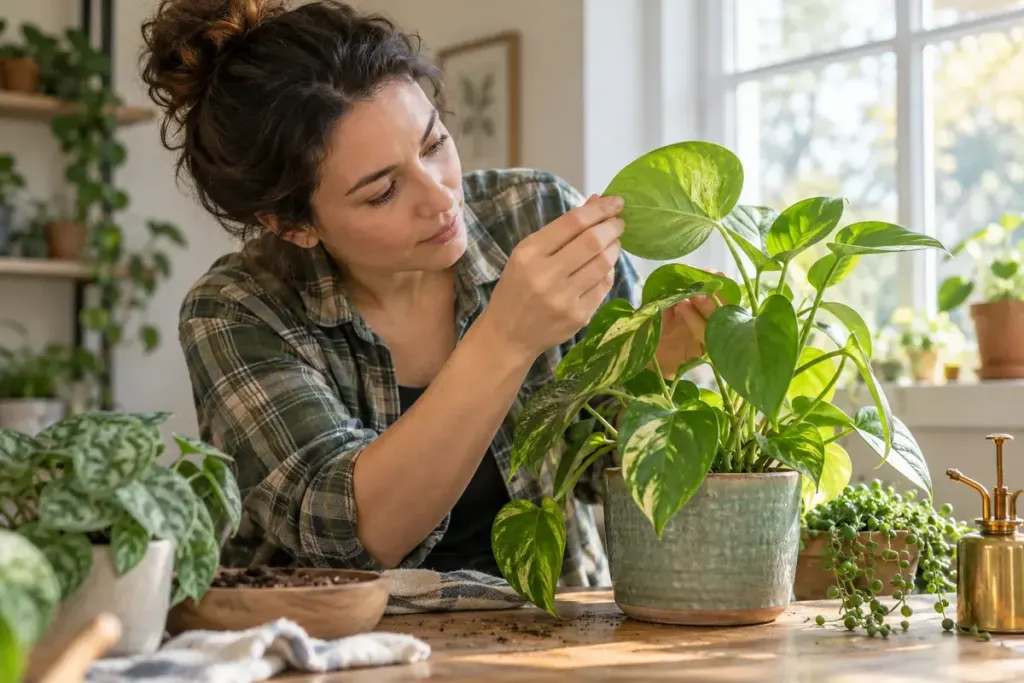
A plant that has outgrown your windowsill may be perfect for a friend’s room. Before handing it over, inspect it as carefully as you would inspect a plant you were bringing into your own home.
The RHS guide to indoor sap-feeding pests identifies places worth checking, including leaf undersides, new growth and sheltered joints. It also notes that new plants can introduce pests. Sharing plants deserves the same attention as buying them.
Inspect before arranging collection
Look over the leaves, stems and pot area in good light. Note sticky deposits, unusual clusters, webbing or unexplained damage. Do not assume every mark is a pest, but do not dismiss a concern simply because the plant has been yours for a long time.
If something is unclear, seek a reliable identification and postpone the swap. Avoid applying an improvised treatment just before collection and presenting the plant as problem-free. Tell the recipient about any recent issue or treatment so they can decide whether to accept it.
Send a small care history
Include the plant’s known identity, the light it has received, its recent care and any relevant warning about suitability around pets or children. If the identity is uncertain, say so rather than attaching a confident label from a similar-looking photograph.
For a cutting, explain whether it is rooted and what medium it has been in. A recipient should not have to guess whether the object in the jar is ready for the same care as an established potted plant.
Use a clean, suitable container and secure it for transport. Keep leaves from being crushed and avoid leaving the plant in unsuitable temperatures while waiting for collection. The recipient can keep it separate from other plants initially and continue observing it according to appropriate plant-care advice.
A successful swap extends a plant’s useful life without transferring a hidden problem. The most valuable addition is often an honest note about what you know and what still needs checking.