
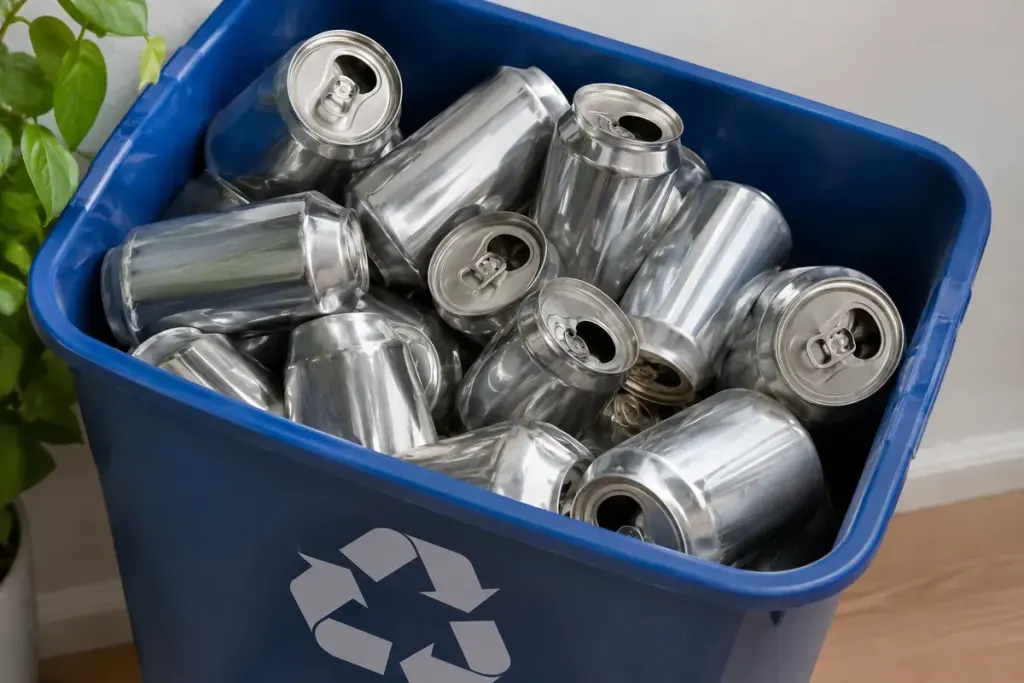
An empty drinks can is small, but its next journey involves much more than a recycling symbol. Collection, sorting, preparation and remelting all stand between the household bin and a new metal product. Keeping unsuitable material out helps those stages work as intended.
The International Aluminium Institute’s can-to-can recycling factsheet explains the idea of returning used beverage cans into new cans. Its technical paper on processing and metallurgy discusses the industrial work behind that loop. Collection alone is not the same event as successful recovery into a finished product.
Follow the material beyond the bin
Recycling facilities need to separate and prepare the incoming material before it can become suitable metal feedstock. Coatings, contamination and mixtures of materials create processing questions. Some material is lost during recovery, so “recyclable” should not be read as a promise of a perfectly lossless cycle.
A drinks-can recycling stream is also a more specific category than “anything containing aluminium”. Foil, composite packaging, pressurised containers and other metal items may follow different local collection instructions. Similar colour or low weight does not prove that two objects belong together.
Make the household decision easy
Start with the actual instructions from your collection provider or deposit-return scheme. Check whether cans should be loose or bagged, whether they should be crushed and how empty they need to be. Do not replace those instructions with a rule copied from another region.
For a simple household audit, look at the last few items placed in the can collection. Can everyone identify which were ordinary beverage cans and which were different packaging? Put the local instructions near the container if the distinction keeps causing confusion.
Keep food and drink residues from becoming a reason for a messy shared bin, using the provider’s preparation guidance. There is no advantage in turning a small sorting task into unnecessary water use, but neither is a half-full can ready for a dry recycling stream.
If the collection rules change, update the note rather than assuming the old habit remains correct. The household controls only the beginning of the process, yet that beginning matters. A clearly identified, appropriately prepared collection gives the next stage a better material stream to work with and makes the promise of useful metal recovery more realistic.