
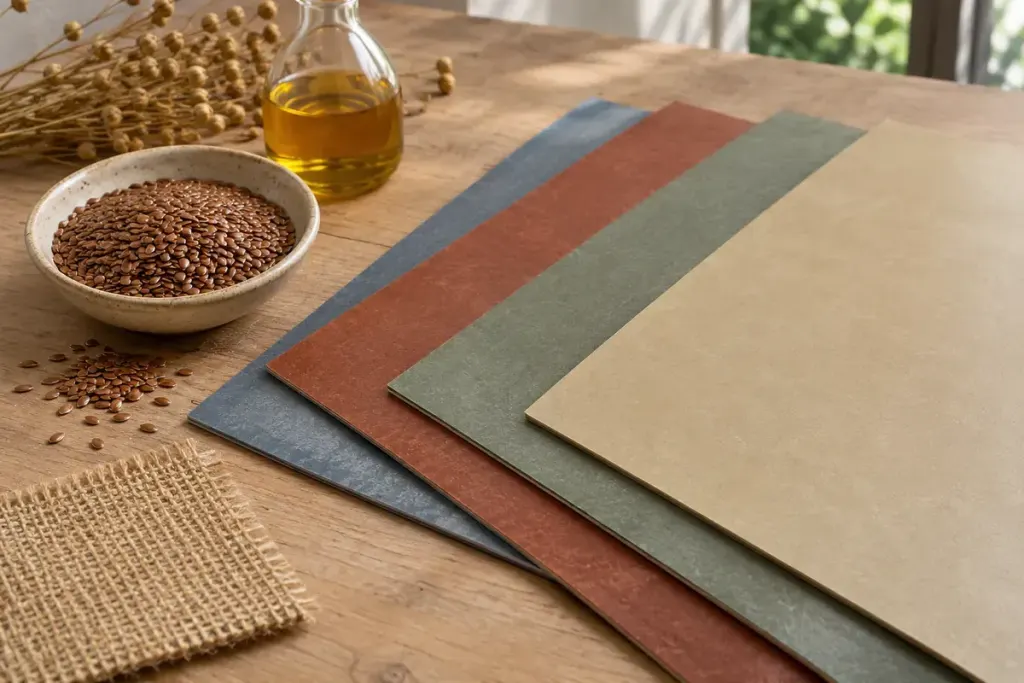
A soft sheet floor is often called “lino” regardless of what it contains. That shorthand is unhelpful when you want to compare materials or find the correct care instructions. Linoleum and vinyl are separate product families, even when both come in a similar colour or format.
Read the ingredients behind the finish
Forbo’s Marmoleum material sheet describes vegetable oils and rosin forming a binder, with ingredients including wood flour, limestone and pigments, applied with a jute backing. This is a manufacturer-specific account of linoleum production, rather than an ingredient declaration for every floor sold under the name.
Tarkett’s flooring overview treats vinyl and linoleum as distinct categories and identifies PVC in its vinyl discussion. Vinyl products may have different layers and constructions. A printed wood pattern, a sheet edge or a flexible feel cannot reliably identify the full recipe.
Compare two named products, not two slogans
For a useful sample-board exercise, write the exact product name beneath each piece and ask for its technical sheet, care guide and environmental product declaration where available. Then compare the following questions for the room you have:
- Is the product approved for this location and its expected moisture conditions?
- What substrate preparation, adhesive or locking system is required?
- Can a damaged section be repaired or replaced, and will matching material be available?
- What collection or disposal route actually exists in your area?
A natural ingredient list does not answer every durability or environmental question. Equally, a claim about the water resistance of the flooring material does not describe every joint, substrate or installation. Read the conditions attached to the particular product.
Give the floor already in place a separate decision
If an existing floor is serviceable, identify it and investigate suitable care before assuming replacement is necessary. Ask a qualified installer about uncertain older materials before disturbing them; this article does not identify an old floor from appearance or recommend sanding it.
The practical goal is a documented choice that suits the room and can be maintained. Calling everything “lino” loses precisely the information needed to make that choice.