
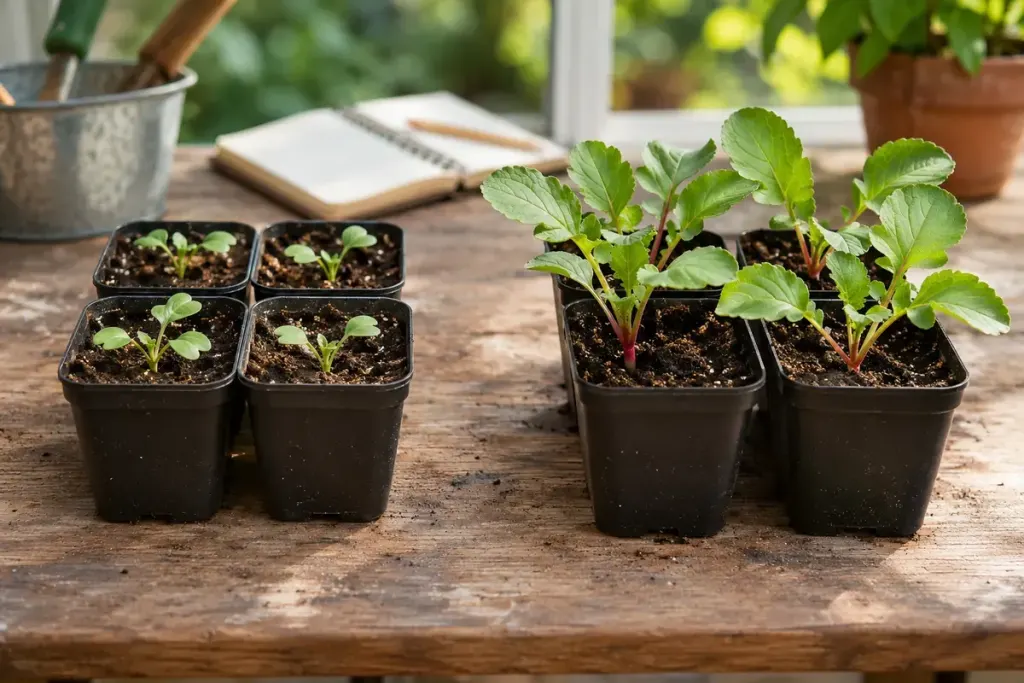
A pile can look dark and crumbly before you know how seedlings will respond to it. A germination comparison adds a practical observation: do seeds start and grow in the compost under the same conditions as seeds in a familiar growing medium?
The University of Florida IFAS compost maturity tests describe approaches using seed germination and subsequent plant growth. Immature compost can inhibit plants, which is why appearance alone is not always enough when the intended use involves young seedlings.
The comparison needs a control
Follow a defined extension protocol rather than improvising a test and assigning it a scientific pass mark. A control group helps distinguish a compost problem from poor seed viability or unsuitable growing conditions. Use the same seed batch and keep the relevant conditions comparable, recording any differences.
The IFAS guidance includes a comparison with a growing medium that has worked before. Read its complete method before starting, including the containers, observation period and calculation. If an instruction or quantity is unclear, ask the extension service rather than quietly changing the method and treating the result as equivalent.
Write down counts, not just impressions
A simple record can include the start date, seed batch, compost sample, number sown and number germinated in each container. Add brief notes about moisture, light and any mishap. Photograph the same view on each observation day so that later growth can be compared sensibly.
For an illustrative calculation, 18 seedlings from 24 sown seeds is 75 percent germination. That arithmetic is straightforward, but the percentage alone does not tell you why the other seeds failed. A similarly poor control would change the interpretation substantially.
Also distinguish germination from healthy continued growth. A seed that emerges and then stalls gives different information from one that never emerges. Keeping those observations separate is more useful than declaring the entire batch successful after the first green shoot.
Keep the conclusion within the test
A favourable seed response does not certify that compost is free of every contaminant or suitable for every crop and application. Use it as one part of assessing a known compost batch, and follow local extension advice for the intended use. When the comparison is poor or inconsistent, investigate the conditions and allow further curing where appropriate before committing valuable seedlings.