
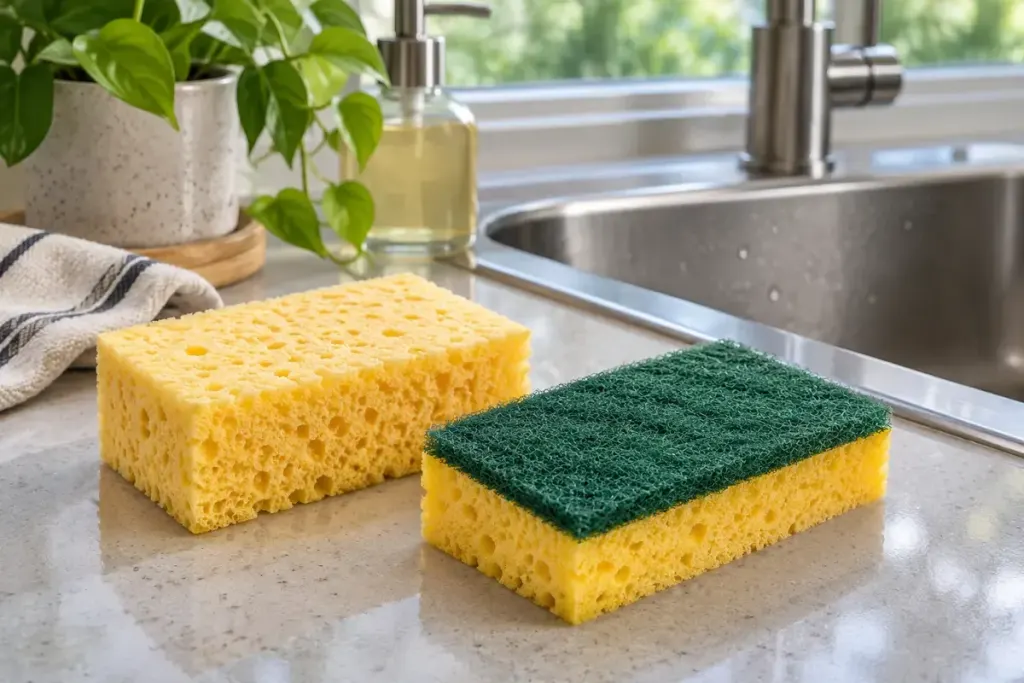
The word “cellulose” on a sponge packet describes material, but it may not describe every part of the item in your hand. A soft sponge can be bonded to a separate scouring layer, and the complete product may contain other ingredients.
A 3M safety information document for cellulose sponges and sponge cloth lists the composition of the covered products. It is a product-family example, not a universal recipe for all sponges. The useful lesson is to identify the actual item rather than infer its whole composition from one familiar material name.
Look at the layers
Check whether the product is a plain sponge, a composite scourer or a coated cloth. Read the packaging for material information and disposal instructions. A green abrasive face should not be assumed to be plant material merely because the sponge beneath it is cellulose.
If information is unclear, ask the manufacturer about the complete product, including adhesives and coatings. Phrase the question around the exact model rather than asking whether “sponges” are biodegradable in general.
Match the claim to a real disposal route
Composting conditions and local collection rules matter. Do not place a used composite sponge in food-waste collection solely on the basis of its colour or a broad environmental slogan. Check what your local service accepts and whether the manufacturer’s claim applies to home or industrial conditions.
The substances used with the sponge can also matter to disposal. Follow the relevant product and local instructions, especially after cleaning with chemicals that require particular handling.
For the next purchase, compare usable lifespan, cleaning suitability and the clarity of material information. A product that performs its job and can be maintained appropriately may be a better practical choice than one selected only for a reassuring label.
Good waste sorting begins with the whole object. The cellulose portion is useful information, but it is only the beginning of the material story.