
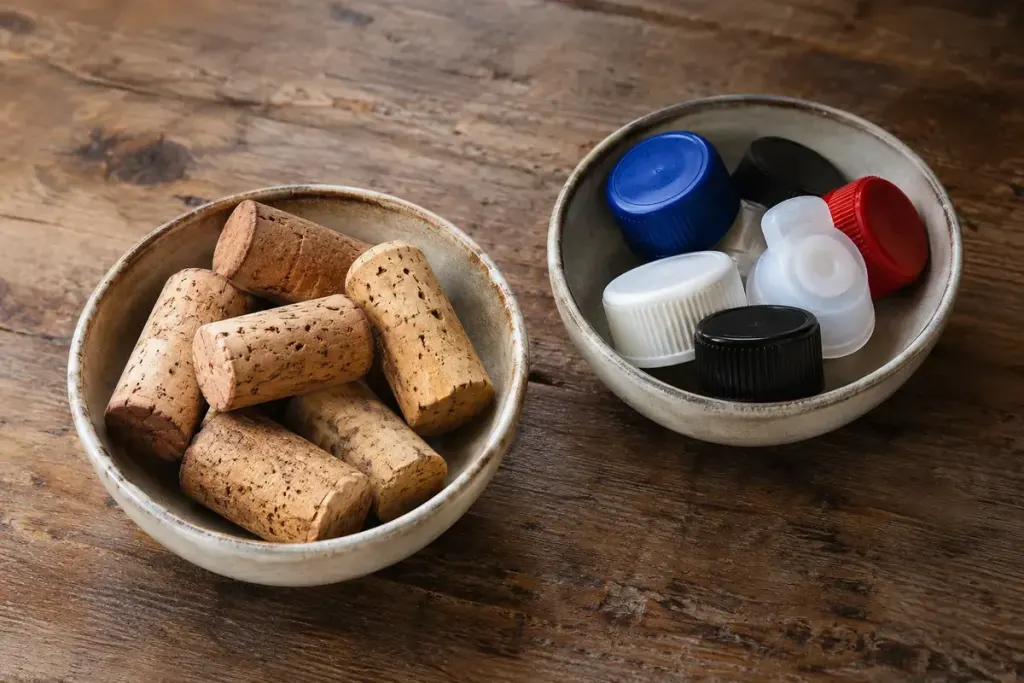
A bowl of bottle stoppers can contain several materials even when every piece has the familiar cork shape. Some are natural cork, some use cork granules, and others are synthetic closures. Sorting them by colour alone is not a reliable way to choose a recycling route.
The collection scheme’s rules are the useful starting point. For example, ReCORK’s US frequently asked questions state that it accepts natural corks rather than synthetic ones and asks people to remove foreign materials such as foil, wire and plastic. It also recommends confirming that a collection location is actively accepting cork before visiting.
Check the stopper, then the destination
Keep uncertain closures separate while you identify them from packaging, manufacturer information or the collector’s visual guide. Do not burn or otherwise damage a stopper to test it. If the material remains unclear, ask the receiving scheme instead of adding it to a batch that is meant to contain one material.
A nearby shop listed on a collection map is a lead to verify, not proof that its box is still available today. A quick call can establish the accepted types, opening hours and whether a larger quantity needs a separate arrangement.
Likewise, a specialist collection programme in one country does not establish what your household recycling service accepts. Check local instructions for both natural and synthetic closures. “Recyclable somewhere” and “accepted in this bin” answer different questions.
Keep a small collection useful
If you save corks at home, use a clean container and attach a simple note with the destination and accepted material. Remove obvious foreign pieces as you sort. Review the destination before the container becomes a permanent cupboard collection with no planned outlet.
For a shared office or community collection, place a photograph or description of the accepted items beside the container. Give uncertain items a separate place rather than inviting everyone to guess. One person should confirm the receiving arrangement before advertising the collection more widely.
The aim is not to create the biggest possible pile. It is to collect a material that a real recipient can use, with enough care that good intentions do not become another sorting problem downstream.