
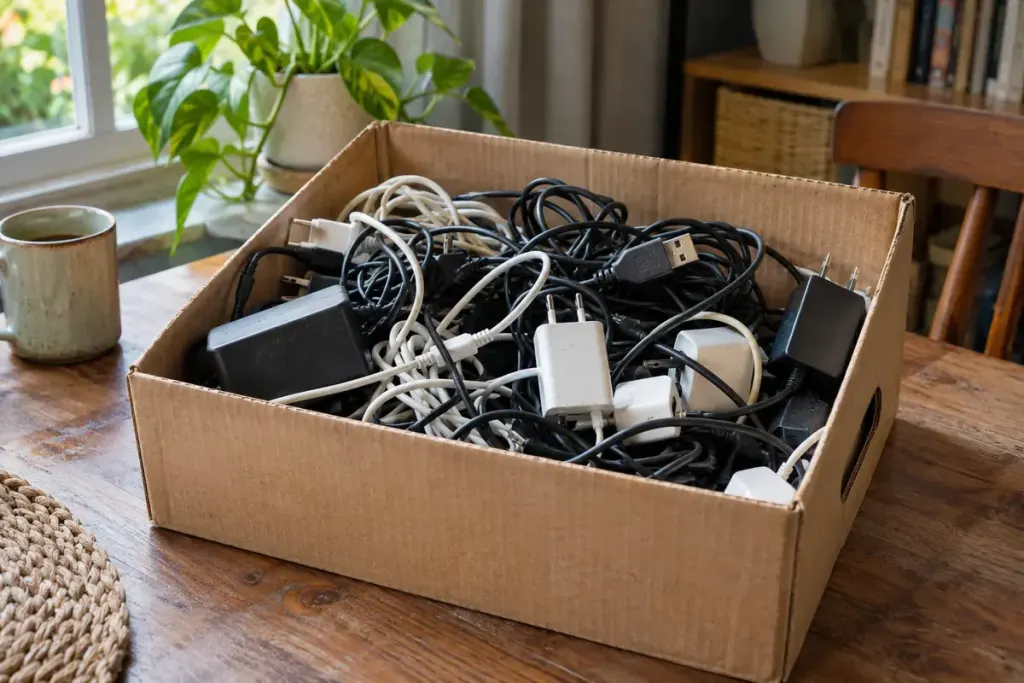
A drawer contains three phone chargers, several mystery cables and an old power bank. They may all look like small accessories, but they do not necessarily follow the same disposal instructions. Start by identifying what each item is before putting the whole bundle in a recycling bin.
Keep working, suitable accessories that you actually need. If passing an item on, confirm that it is in safe condition and appropriate for the receiving device. A damaged lead or unidentified power supply should not be offered as a useful donation merely to empty the drawer.
Find the local collection route
The UK’s Recycle Your Electricals guidance on cables describes electrical-recycling and retailer routes. Availability and conditions vary, so use your local authority’s or collection provider’s instructions wherever you live. A plastics or metals bin is not automatically the right destination for an assembled electrical item.
Check whether the site accepts chargers, loose cables and battery-containing devices, and whether an appointment or purchase is required. Doing that before travelling prevents a bag of unsuitable items from returning to the same drawer.
Separate batteries from ordinary leads in your plan
A power bank contains a battery; a simple cable does not. Follow the collection service’s battery instructions and do not dismantle a sealed device to make it resemble a cable. If a battery is swollen, leaking or damaged, ask the provider for its specific safe-handling route.
Store items awaiting collection somewhere dry and secure, away from children and without crushing battery devices. Avoid cutting leads or opening mains chargers as a sorting exercise.
Label the bag with the collection destination and make the trip part of an existing errand. The useful outcome is an accepted handover through the proper route, not simply moving small electricals from one household container into another.