
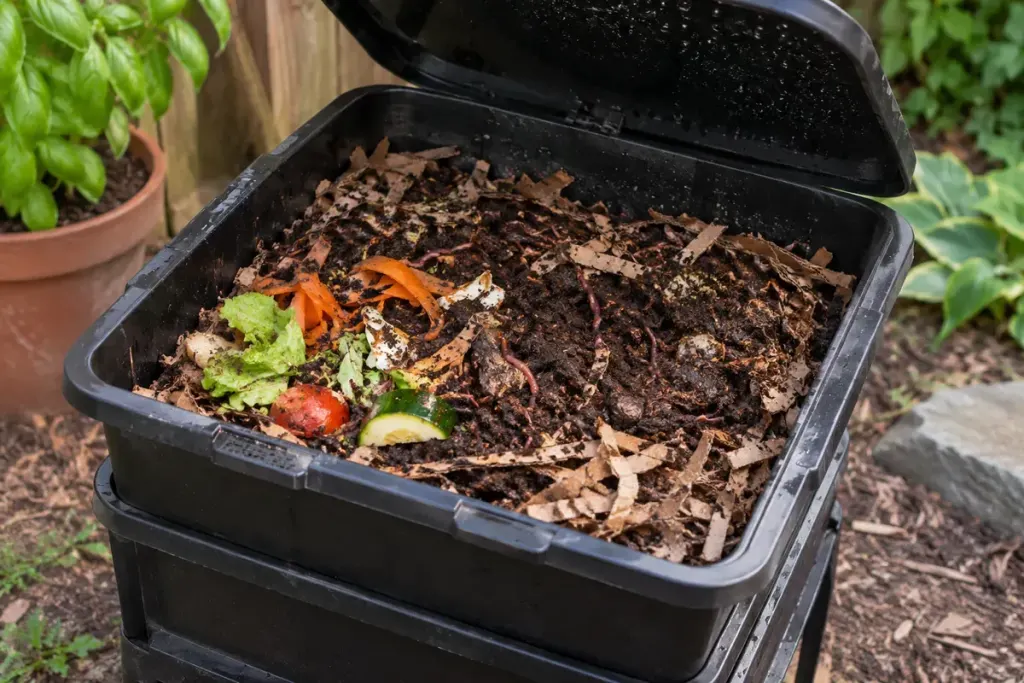
A worm bin is often introduced as a place for vegetable scraps. That leaves out the material the worms live among. Damp, airy bedding gives the bin structure; food scraps alone do not make a comfortable home.
Penn State Extension’s vermicomposting guidance describes bedding and suitable composting worms, including red wigglers. It also emphasises an appropriate container with ventilation and drainage. An ordinary sealed bucket of wet scraps is a different environment.
Think of bedding as habitat
Plain shredded paper or suitable cardboard can provide a loose base. Moisten the material so it feels damp rather than dripping, and separate compacted pieces so air can move through it. Follow the bin supplier’s guidance about materials, depth and drainage.
Keep the bin in an appropriate, sheltered location. A system that works in a shaded utility space may behave very differently in direct sun or cold outdoor conditions. Check the recommended conditions for the worms and the particular container before choosing its permanent position.
Observe before increasing the feed
Begin with modest amounts of suitable scraps and see how quickly they disappear. If recognisable food is accumulating, adding another large bowl is unlikely to improve the balance. Spread feeding over time instead of treating the bin as unlimited storage for a sudden kitchen clear-out.
A useful household routine is to note three things when opening the lid: whether the bedding is drying or becoming sodden, whether uneaten food is building up, and whether the material is staying loose. These observations help you describe a problem when consulting the supplier’s troubleshooting instructions.
Strong odours and persistent excess moisture are reasons to review feeding, airflow and drainage. Do not simply perfume the bin or add more wet food to hide the problem. Keep collecting containers and tools clean, and wash your hands after handling the contents.
The practical aim is a manageable living system. Once bedding and conditions are stable, the amount of food waste it can handle becomes easier to judge.