
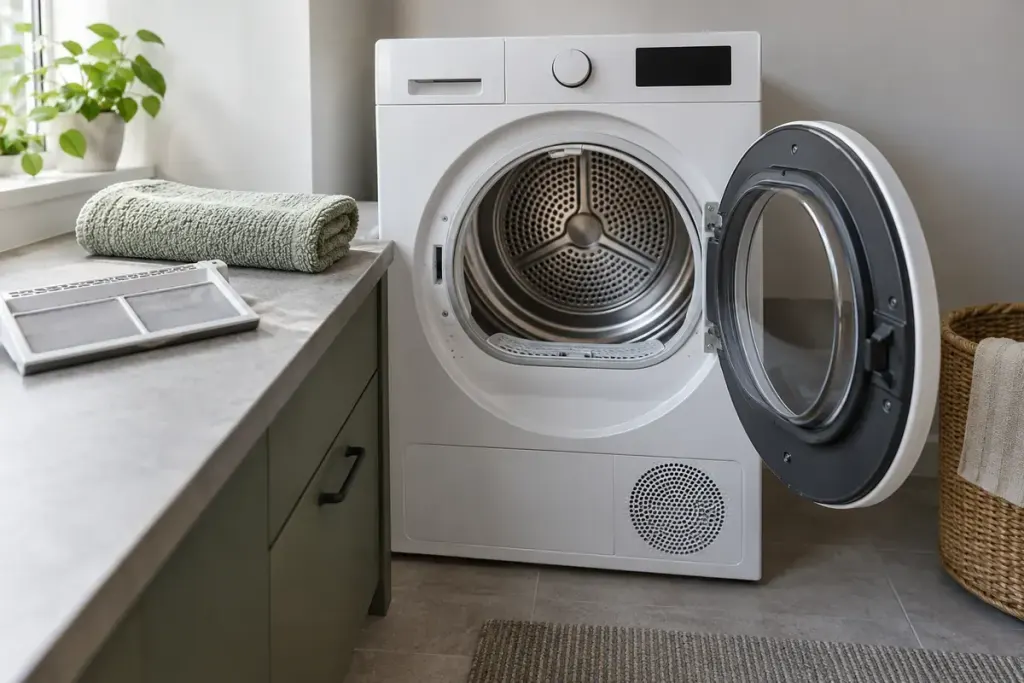
A heat-pump tumble dryer still needs to move moisture out of clothes. The difference lies in how it handles the warm, damp air. Instead of relying on the usual vented-dryer arrangement that sends heated air outdoors, it recirculates air through a heat-pump system and collects the removed water.
ENERGY STAR’s explanation of heat-pump dryers describes the closed-loop process. Moisture condenses as the damp air is cooled, and heat recovered through the refrigerant cycle helps warm the air again. The water then needs an approved drain connection or collection arrangement, depending on the model.
No exhaust duct does not mean no installation requirements
A ventless design can offer useful placement options, but it still has instructions for clearances, electrical supply, drainage and operating conditions. Measure the proposed space and read the model’s installation requirements before treating a cupboard or small room as suitable.
Check how the collected water is handled. If the appliance uses a tank, know when and how it must be emptied. If it connects to a drain, follow the specified hose arrangement. Neither task is solved simply by choosing a dryer without an exterior exhaust vent.
Compare a complete laundry routine
When comparing models, consider capacity, programme information and energy consumption on a comparable basis. A headline efficiency figure does not tell you how an unsuitable load or an inappropriate programme will behave in your own routine. Follow the garment care labels and the appliance’s loading guidance.
Allow the programme to do its job instead of repeatedly opening the door to judge progress by how hot the drum feels. A different operating temperature from an older dryer is not, by itself, a fault. Use the manual’s troubleshooting steps if clothes consistently remain unsuitable for storage.
Clean accessible filters and other user-serviceable parts as directed. Keep maintenance involving the sealed refrigerant circuit for qualified service personnel. The heat-recovery system is the central feature, but ordinary care, correct installation and suitable loads are what allow it to work as intended over time.