
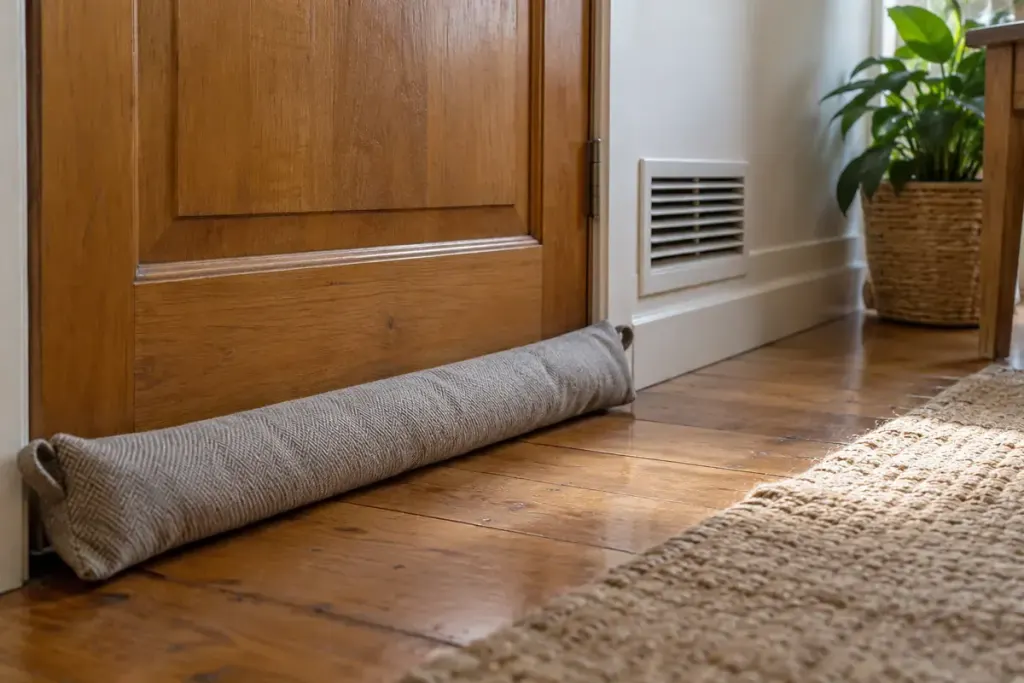
A cold movement of air near a door makes a draught excluder seem like an obvious fix. Before covering the opening, establish whether the air is entering through an unintended gap or following a route the home needs.
Draught-proofing and ventilation serve different purposes. The Energy Saving Trust’s guidance distinguishes unwanted leakage from intentional ventilation and identifies openings that should remain clear.
Make an opening map before a shopping list
Walk around the room and note the location of window vents, wall vents, air bricks and extract fans. Include any fixed ventilation associated with fuel-burning appliances. Do not cover an opening just because you can feel air moving through it.
Then identify the suspected leak itself. Is air coming around a worn external door seal, through a damaged frame joint, or from a purpose-made vent nearby? A fabric roll at the bottom of the door may leave the actual problem untouched.
If the purpose of an opening is unclear, ask a competent installer or the building manager before sealing it. This is especially important where combustion appliances or a designed ventilation system are involved.
Choose a fix for the identified gap
For an unwanted door or window leak, inspect the condition and movement of the frame and existing seals. Select a product intended for that location and follow its fitting instructions. The door must still open, close and latch properly.
A loose excluder should not obstruct a walking route or interfere with safe use of the door. Do not treat a temporary comfort measure as a repair for a damaged frame or a substitute for professional attention to a more substantial defect.
After fitting a permitted seal, check the operation again and keep intentional vents clear. If the room develops persistent condensation or feels poorly ventilated, investigate the ventilation and moisture conditions instead of adding more seals by default.
A useful home-maintenance note records the gap you identified, the product fitted and any remaining concern. This turns draught-proofing into a specific, reviewable improvement. The aim is a more comfortable room with its necessary airflow still working.