
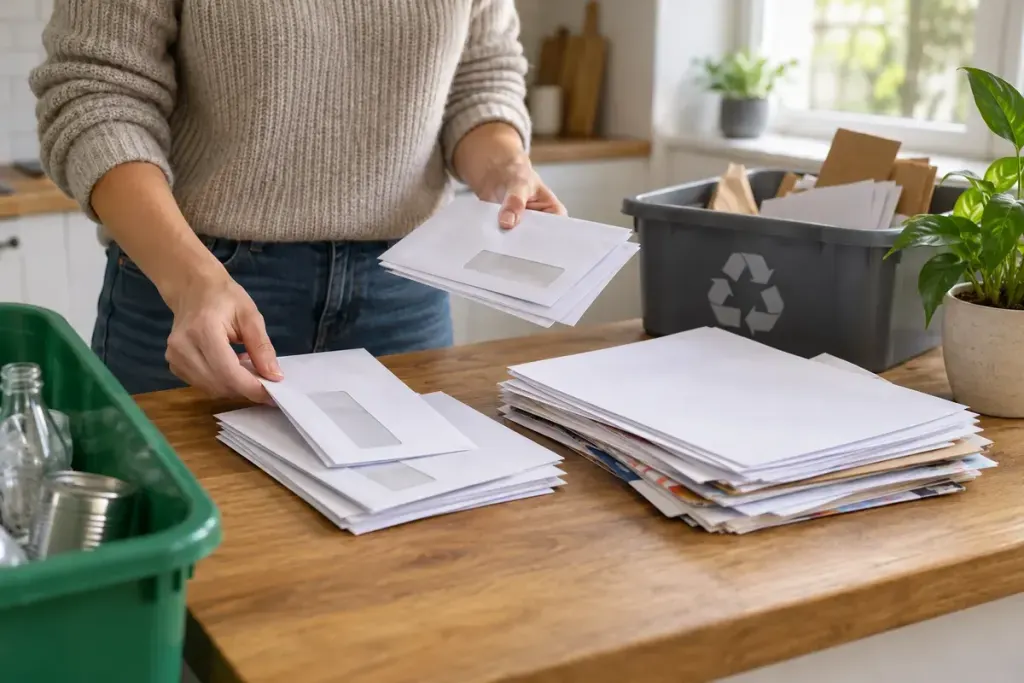
The small clear window in an envelope can make a simple paper-sorting decision feel uncertain. Some collection systems accept it with the envelope. The right answer for your bin comes from the collection’s current instructions, not from the window’s appearance alone.
For example, West Sussex County Council’s envelope guidance says plastic windows do not need to be removed from accepted envelopes. That is a useful local example, not a rule to apply automatically to every country or collection service.
Identify the whole item
An ordinary paper envelope is different from a padded mailer, a plastic shipping bag or a paper-looking item with bonded layers. Open it and check the construction before placing it with paper.
Search your collector’s guidance for the specific item, including any instructions about padding, liners or contamination. If the entry is unclear, ask the service rather than assuming that all mail packaging belongs in the same stream.
Deal with the contents separately
Remove cards, promotional samples and other objects. Consider personal information before disposal, using an appropriate privacy method. If you shred paper, check the separate local rule for shredded material; it may not be collected in the same way as whole sheets.
Keep accepted paper dry and free from food or liquid contamination according to the collection instructions. Store uncertain mixed-material items separately until you have an answer instead of adding them to a bin on hope alone.
For a household reminder, write the collector’s name and date beside the rule you found. That makes it easier to review after moving home or when the service changes.
The aim is fewer guesses. A tiny window should prompt a quick check of the local process, while the envelope’s construction and contents still receive attention of their own.