
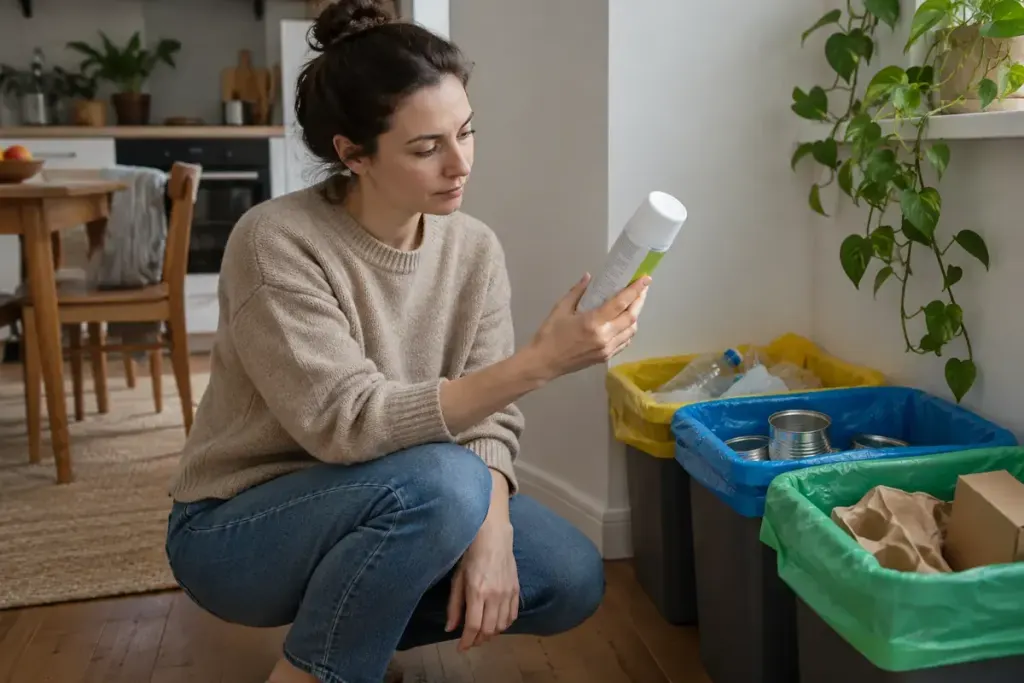
A spray can is made of metal, so the recycling bin seems like the obvious destination. The missing details are whether product or pressure remains and whether the local collection system accepts that kind of container.
The US EPA’s household recycling guidance identifies unemptied aerosol cans among items that can require a household hazardous-waste route. Local arrangements matter. For example, New Zealand’s EPA aerosol guidance says not to put empty aerosol cans in household recycling bins and directs people to appropriate alternatives.
Look up the item, not just the material
Use the current waste guide for your council, municipality or collection provider. Search for aerosol cans and distinguish an empty household product from one that is partly full, damaged or no longer sprays. A rule for ordinary food tins does not answer the aerosol question.
Keep the product label available when asking the waste service for advice. The contents can affect handling. Do not puncture, crush or heat a can to make it easier to recycle, and do not release unwanted contents simply to qualify it as empty.
Confirm the handover details
If a collection site is required, check whether it accepts the product, whether a booking is needed and how the container should be transported. Follow the product’s storage directions while waiting, including precautions about heat and children. A leaking or damaged can needs specific advice from the relevant local service.
A short household note can save repeated searching: record the accepted route, the provider’s page and the date checked. Keep that note local to your address instead of forwarding it as a rule that applies everywhere.
The useful habit is to match the item to an actual collection route. Material alone does not guarantee acceptance, and putting a questionable can into the nearest recycling bin does not resolve the uncertainty for the people who handle it next.