
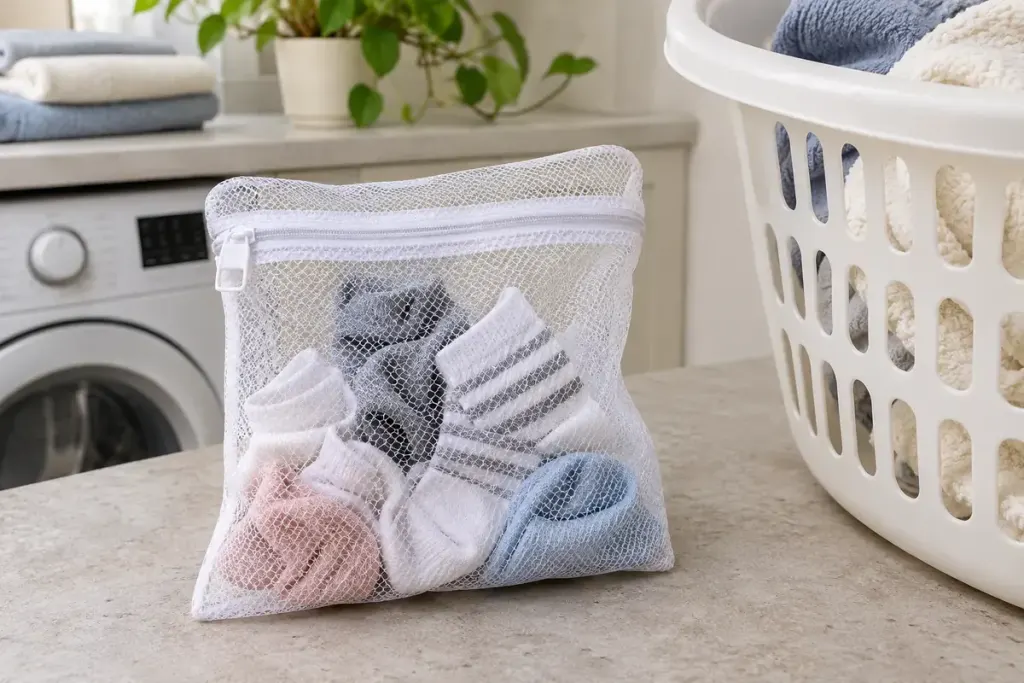
A mesh laundry bag can keep small washable items together through a cycle. It is particularly useful when the alternative is searching for loose socks or untangling a small item from the rest of the load.
The bag does not make an unsuitable garment machine washable. Begin with the care labels on the items and the instructions for the bag and washing machine. Temperature, cycle and drying requirements still apply.
Use the bag as a container, not a packed cushion
Leave room for the contents to move and for water to pass through the mesh. If the bag is tightly stuffed, split the items into suitable loads or bags. Putting everything in one pouch may be convenient for counting, but it can make washing less effective.
Check the closure before each use. A loose zipper or damaged seam can release the contents, and an exposed fastening may catch on nearby fabric. Replace or repair the bag appropriately when it no longer performs its simple job.
Sort by care needs as well as size
Two small items do not necessarily belong in the same wash. Colour, material and label instructions matter. Do not put a delicate item into a harsh cycle merely because it is inside mesh.
After washing, open the bag promptly and check the contents. Follow each item’s drying instructions rather than moving the closed bag automatically into a dryer. Dry the bag itself before storing it to avoid leaving a damp bundle in the laundry area.
For a household routine, designate one place for clean bags and another for items waiting to be washed. Count matched pieces before and after if losing them is a recurring annoyance. That small habit can reveal whether the problem happens during sorting, washing or putting clothes away.
A laundry bag’s environmental benefit should not be overstated without evidence. Its immediate value is practical: helping suitable items stay together and making careful washing easier to repeat. Keeping clothes usable still depends on the complete care routine, not on the bag alone.