
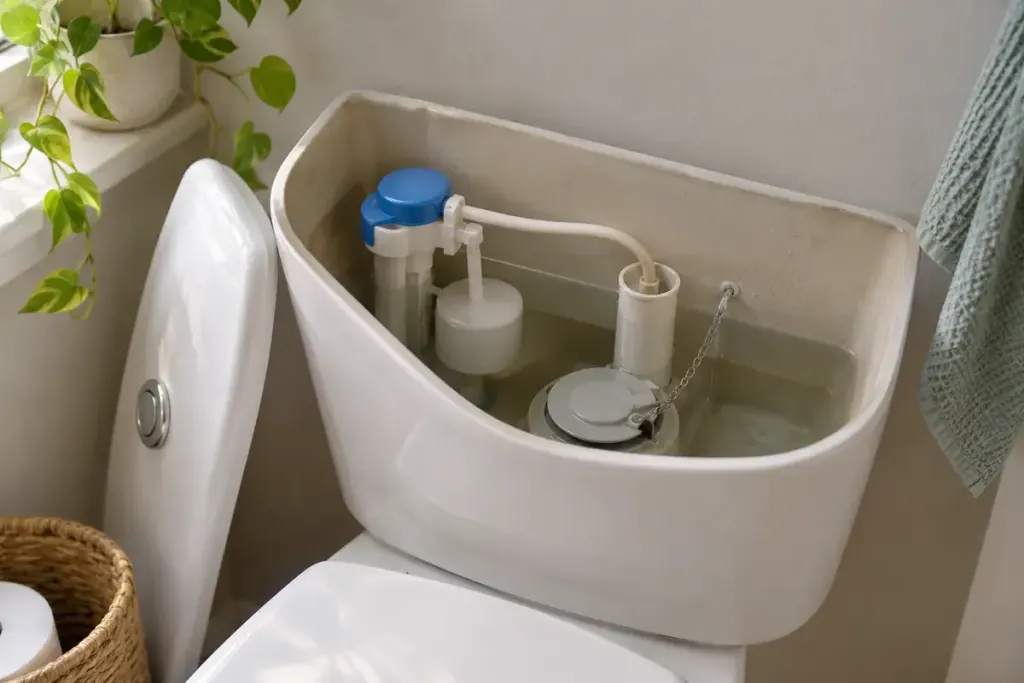
A toilet that is not being used should not need to keep sending water into its bowl. Some leaks announce themselves with repeated refilling; others are quiet enough to escape notice. A simple observation can help establish whether the cistern is losing water between flushes.
The US EPA WaterSense home-maintenance guidance describes a dye check: put a small amount of food colouring in the tank, wait ten minutes without flushing and look for colour in the bowl. Flush afterwards to help avoid staining. Follow the fixture manufacturer’s instructions and do not add dye to a system where it is unsuitable.
Check only what you can access safely
If the cistern lid is accessible, lift it carefully and place it on a stable surface. Ceramic lids can be heavy and fragile. Concealed cisterns or unfamiliar mechanisms may be better checked by a plumber rather than opened experimentally.
Keep the test separate from cleaning products. Do not mix chemicals, and do not dismantle or adjust the mechanism simply to make the test work. The question at this stage is whether water passes into the bowl while the toilet is idle.
Record the time, whether colour appeared and whether you heard refilling. A photograph can help explain the observation to someone arranging a repair. The test indicates a possible leak path; it does not measure the daily volume lost.
Identify the mechanism before buying a part
Different cisterns use different outlet seals, valves and flush arrangements. Advice to replace a “flapper” will not fit every toilet. Find the model information or have the mechanism identified before ordering a replacement.
After a suitable repair, repeat the observation to confirm that the symptom has stopped. If the result is unclear, or water is leaking onto the floor, arrange professional help promptly rather than leaving the test as the final step.
A quiet leak is easy to postpone because the toilet still flushes. Turning that suspicion into a clear observation makes the next action simpler and avoids guessing at both the cause and the amount of water involved.