
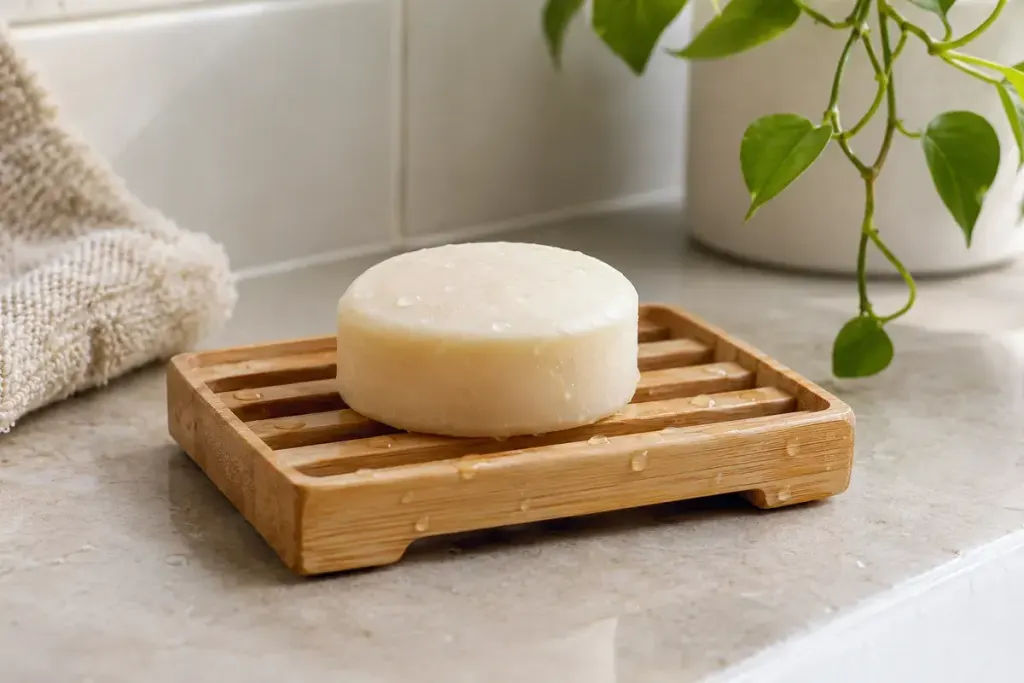
A solid shampoo bar can become inconvenient if it spends the day sitting in a puddle. Before choosing a special container, look at where the bar will rest between washes and whether water can actually drain away.
Lush’s storage directions for one of its shampoo bars call for a dry, draining place between uses. The principle is practical, but follow the instructions for your particular formula rather than assuming every solid hair product behaves identically.
Check the resting place
A dish with ridges is only helpful if the collected water can leave or be emptied. Put the holder somewhere that is not continually sprayed by the shower. Check the underside of the bar as well as the top; a dry-looking surface can hide a wet contact area.
For an original one-week observation, use the holder you already own and note whether the bar remains sitting in water after the bathroom is tidied. Adjust its position or drainage before deciding that another accessory is necessary.
Separate travel storage from daily drying
A closed travel tin keeps a bar contained in a bag, but a wet bar sealed inside cannot dry as it would in open air. Follow the product’s storage guidance, allow suitable drying time when possible and open the container at your destination rather than leaving it forgotten in a damp washbag.
Keep the container clean and let it dry too. If a bar changes unexpectedly in smell, appearance or texture, consult the maker’s guidance instead of assuming that all changes are harmless.
Judge the routine you can maintain
Claims about replacing bottles or lasting a certain number of washes depend on product and use. Do not turn one brand’s figure into a universal environmental calculation. A useful personal measure is whether you finish the product, store it well and avoid buying replacements prematurely.
Use the bar as directed for your hair and scalp; stop if it causes irritation. A low-waste routine still needs to suit the person using it.
The simplest improvement may be a better drying spot rather than a new purchase. When the storage works, the bar becomes an ordinary usable bathroom product instead of a soggy experiment.