
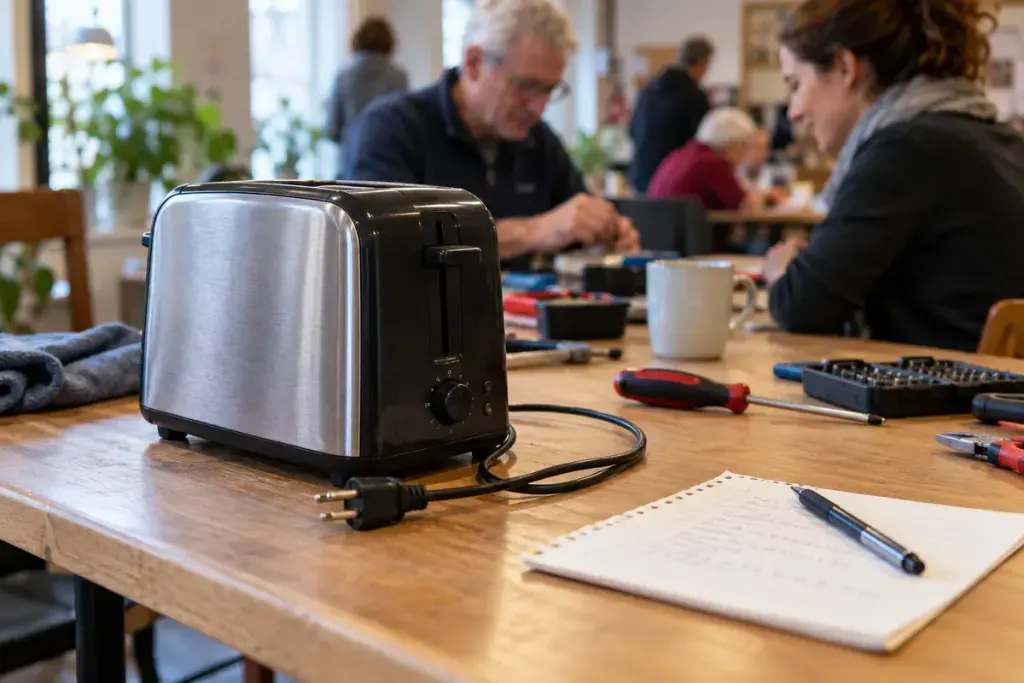
A small appliance works sometimes, but not when you most need it. At a repair event, it switches on perfectly. Without a description of the intermittent problem, the volunteer has little to investigate beyond the moment in front of them.
Repair Café’s frequently asked questions explain the model and direct visitors to local organisers for practical details. Check what your chosen event accepts, whether booking is required and which skills are available before travelling with a bulky item.
Describe what happens, not your guessed diagnosis
Write a short account of the symptom: when it began, whether it occurs every time and what the item does just before stopping. A report that the device stops after several minutes is more useful than confidently naming an internal component you have not tested.
Include any relevant recent event, such as a fall or liquid exposure. Do not repeatedly power an item that smells burnt, sparks or appears unsafe merely to gather evidence. Stop using it and ask the organiser whether it is appropriate to bring.
Bring what the assessment needs
Ask whether the original power supply, remote control, detachable parts or instructions are needed. Keep small pieces together and label them. Clean the item appropriately without dismantling safety-critical parts or erasing useful fault information.
For a device containing personal data, discuss privacy and access arrangements beforehand. Back up important information where safe and feasible, and do not hand over passwords unnecessarily. An assessment may be limited if the relevant function cannot be accessed safely.
Leave room for an honest outcome
A repair event cannot guarantee that every item will be fixed. Parts, time, tools or safety requirements may prevent completion. Record the diagnosis and suggested next step so the visit remains useful even if the item goes home unrepaired.
Good preparation turns it is broken into a problem someone can begin to understand. That is often the first practical step towards keeping an object in use.