
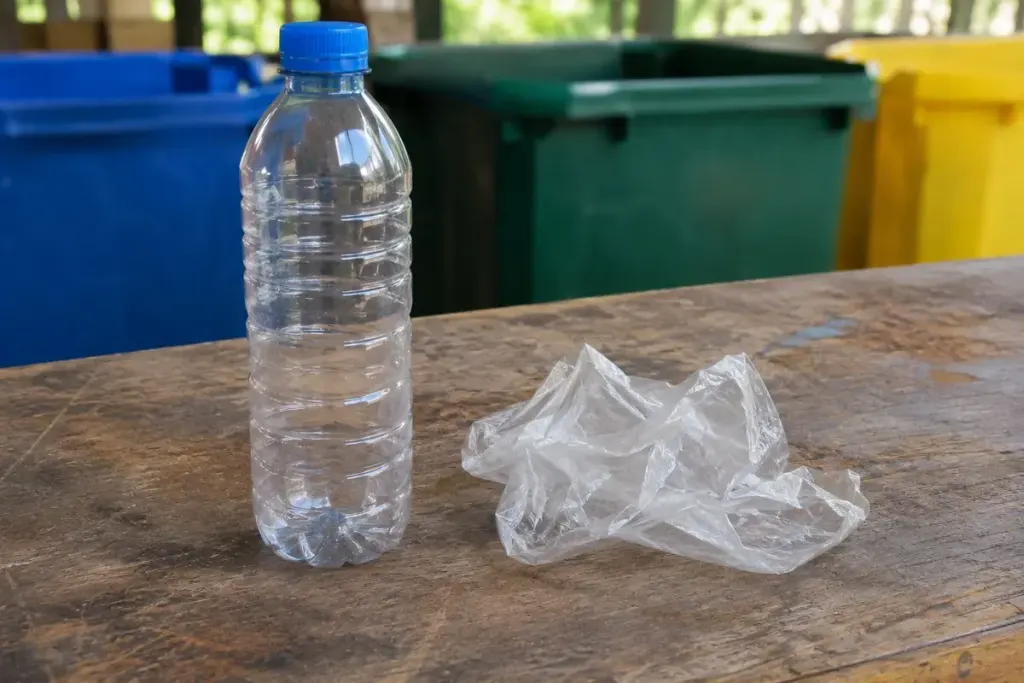
A bottle packed with flexible plastic looks like a completed recycling task. But a finished object is not the same thing as a functioning waste route. Before starting a bottle-brick collection, find out exactly who will use the filled bottles and what happens when that use ends.
Ask the receiving project first
The Global Ecobrick Alliance describes packed plastic bottles and different assembly methods in its ecobrick building guidance. These are the project’s own methods and claims. They should not be treated as independent approval for a particular building, local waste service or fire-safety application.
A school collecting bottles might have a confirmed furniture project, a demonstration planned for one afternoon, or only an idea copied from social media. Those are very different destinations. Ask for the name of the person accepting the material and a current specification before recruiting other households.
- Which bottle sizes and plastic types does the project accept?
- Is it accepting deliveries now, and how many can it actually use?
- Who checks rejected bottles and takes responsibility for them?
- Where will the completed objects be kept, and who will manage them later?
Do not divert an existing recycling stream by assumption
Check your local collection guidance for each item before choosing another route. A clean bottle accepted by your recycling service does not automatically become a better environmental choice because you fill it with mixed packaging. Likewise, the fact that one project accepts a wrapper does not mean every project does.
Preston City Council’s guidance on single-use plastic puts practical reduction choices alongside disposal options. For a household, the simplest project may be to avoid a recurring item rather than create a new stockpile that needs storage and transport.
Write down the last step, too
A useful collection plan fits on one page: accepted material, named receiver, delivery date, maximum quantity and a route for leftovers. If the receiver cannot explain the eventual handling of damaged or unwanted objects, pause the collection. Do not improvise structural or heat-exposed uses for packed bottles. “We have made hundreds” measures production; it does not establish that a safe, lasting use exists.