
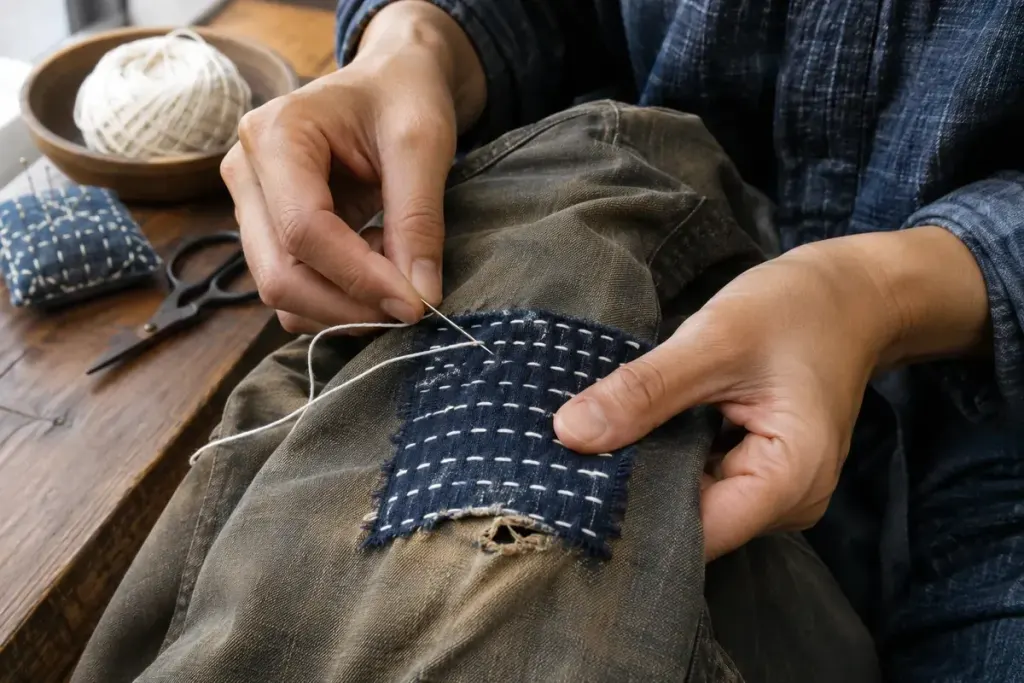
A worn patch on a favourite garment can become a place to add strength and a visible pattern. Sashiko uses repeated running stitches in a Japanese textile tradition associated with reinforcement and repair as well as decoration. A small practice repair offers a useful introduction without requiring an elaborate design.
The V&A’s sashiko workshop description connects running stitches with repairing worn garments. The practice below is a simple sashiko-inspired exercise, not a claim that every visible repair represents all of the tradition’s regional techniques.
Start with the fabric around the hole
Check how far the thinning extends. A patch that covers only the open hole may leave its new stitches anchored in fabric that is already weak. Choose a compatible patch large enough to reach sound material and test the combination on a spare piece if the garment is delicate.
Secure the layers temporarily so they stay aligned without being stretched. Plan a modest series of running-stitch rows before choosing a complicated geometric pattern. A washable marking method should first be tested where it will not damage the garment.
Let the cloth relax between rows
After a short line of stitches, spread the fabric gently and check that it lies naturally. Pulling the thread too tightly can gather the surface unintentionally. Consistent, comfortable stitches matter more than achieving a tiny stitch length at the cost of puckering.
Keep the needle safely controlled and use a thimble or appropriate support if the layers require it. If forcing the needle becomes difficult, reconsider the needle, fabric stack, or project rather than pushing harder toward your other hand.
Before wearing the repair, inspect the back for loose loops and check movement at the repaired area. Record the patch material and thread if you want to repeat the result. The repair can remain visible while still serving a practical purpose: helping a useful piece of clothing stay in use with a surface that tells a new part of its story.