
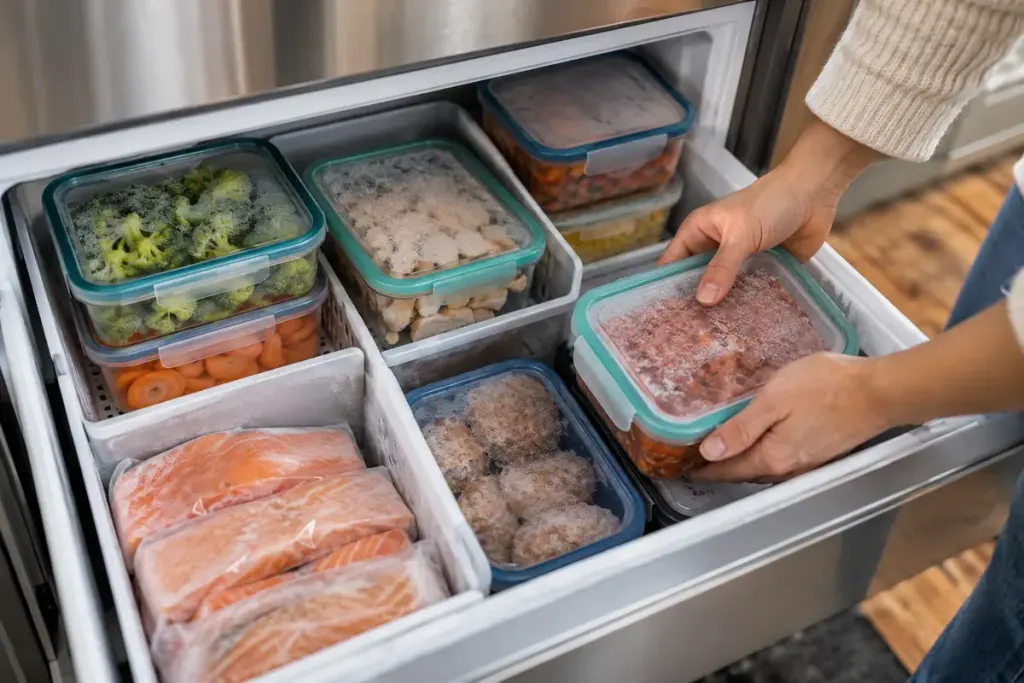
“Soup in freezer” is technically an inventory entry, but it leaves several useful questions unanswered. Which drawer? How much soup? When was it frozen? A freezer list works better when it helps you choose the next meal without opening every container.
Start with a simple location system that matches the appliance: top, middle and bottom drawer, or clearly named sections. Do not over-organise to the point that one new bag breaks the system. Follow the appliance’s instructions and food-storage guidance when arranging items.
Use one line per usable batch
An invented entry could read: “Middle drawer — lentil soup — two containers, one portion each — frozen 23 October.” Keep the same identifying information on the containers. The Food Standards Agency’s food-safety advice for students recommends labelling frozen food with what it is and when it was frozen. A list is an aid to finding that information, not a replacement for the package label or safe handling.
Record the quantity in a way your household can use. “Three portions” may be clearer than a weight if each portion is already packed for one meal. For ingredients used in varying amounts, a weight or approximate remaining quantity may be more useful.
Update the line when a portion leaves the freezer, and change the location if you move the batch. Put the list where that action is easy: a paper sheet, a shared note or another tool the household already uses. A complicated app that nobody updates is less useful than a pencil beside the door.
Before shopping, scan the list for food you can use according to its storage and defrosting instructions. Do not treat freezing as a way to make previously unsafe food safe, or use appearance alone to override food-safety guidance.
Review the inventory briefly at a regular planning moment. Remove entries that no longer exist and investigate unidentified packages rather than repeatedly moving them to the back. The aim is a current map of usable food, small enough to maintain as part of cooking.