
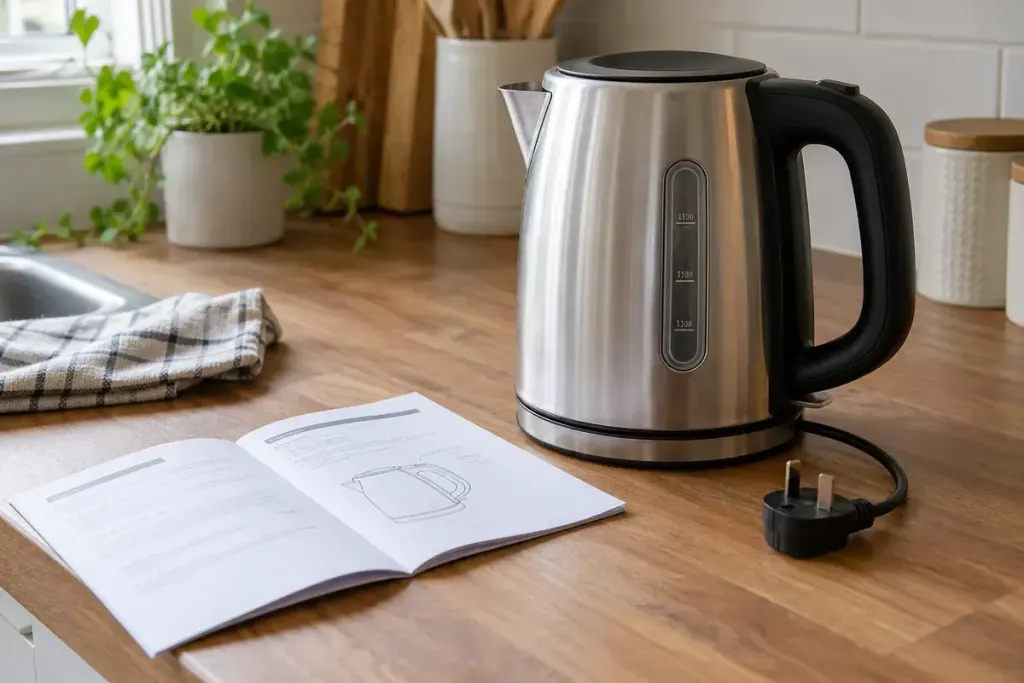
A pale deposit inside a kettle can make an otherwise useful appliance look ready for replacement. Before shopping for another one, identify the deposit and read the care instructions for the exact model.
Manufacturers commonly provide a descaling procedure, but the approved product, concentration and sequence can differ. Breville’s kettle manual directory is one example of a place to locate model-specific guidance. Use your own manufacturer’s instructions rather than treating one recipe as suitable for every kettle.
Inspect the appliance first
Unplug it and let it cool before inspection. Check for damage to the cord, plug, base, lid or body. Descaling is maintenance for deposits; it is not a repair for electrical faults, leaks or broken parts.
If you see damage or the kettle behaves abnormally, stop using it and seek appropriate service advice. Do not immerse the electrical base or attempt internal repairs as part of routine cleaning.
Follow one approved method
Use the specified descaler or method, respecting quantities, contact time and any heating instructions. Do not mix cleaning products or add extra chemicals because the first result looks slow.
Rinse and complete any fresh-water cycles required by the manual before making a drink. Clean a removable filter only by the method permitted for that component, and refit it correctly.
Keep a note of the date and what you observed. Water hardness and use affect how quickly deposits return, so a routine should respond to your appliance rather than a universal monthly rule.
Taking care of a working item can postpone an unnecessary purchase, but do not claim an exact energy saving without measurement. The immediate benefit is knowing whether ordinary maintenance restores the kettle to suitable condition. If replacement is genuinely needed, use the appropriate local electrical-waste route for the old appliance.