
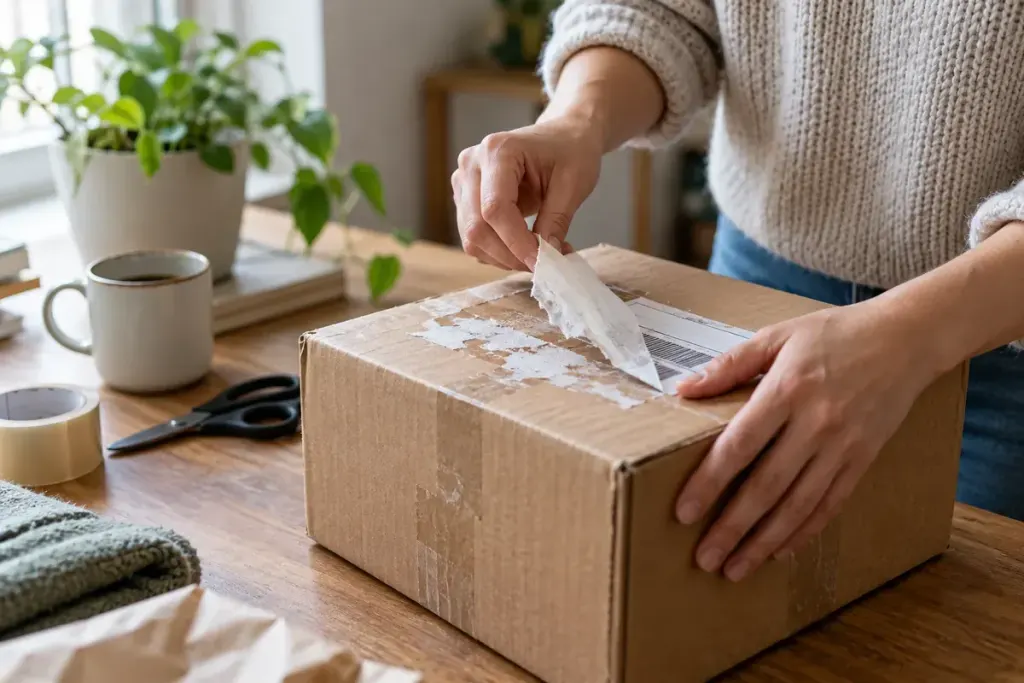
A sturdy delivery box can make another trip. Before adding a new address label, inspect every side. An old barcode or shipping label hidden underneath can create confusion even when the new label looks clear.
Check the box itself first. Crushed corners, weakened seams, damp patches or contamination may make it unsuitable. Reuse should preserve protection for the new contents rather than simply postpone recycling a worn-out container.
Clear the old journey from the outside
Remove or fully obscure obsolete addresses, tracking barcodes and other markings according to the carrier’s instructions. USPS’s reused-packaging guidance warns that old hazardous-material markings can cause delays, returns or removal from the mailstream. Check the rules of the carrier you will actually use.
Do not remove a warning that is required for the parcel’s real contents. If you are sending a restricted item, follow the applicable packaging, declaration and service requirements rather than disguising it as an ordinary shipment.
Choose a flat, visible area for the new label. Avoid folds and corners that make the address or barcode hard to read. Attach the label using the carrier’s recommended method and keep it clear of openings that will be cut or torn during handling.
- Match the box size and strength to the item.
- Use suitable cushioning so contents do not move freely.
- Close the seams with appropriate packaging tape.
- Keep the dispatch receipt and tracking reference.
Before handing it over, turn the parcel through all sides once more. This final check often catches the old label that was overlooked on the base.
Store reusable boxes dry and flattened where practical, separating damaged ones for the local recycling process. A small supply of genuinely usable packaging is more helpful than a large pile that must be inspected again every time you need to send something.