
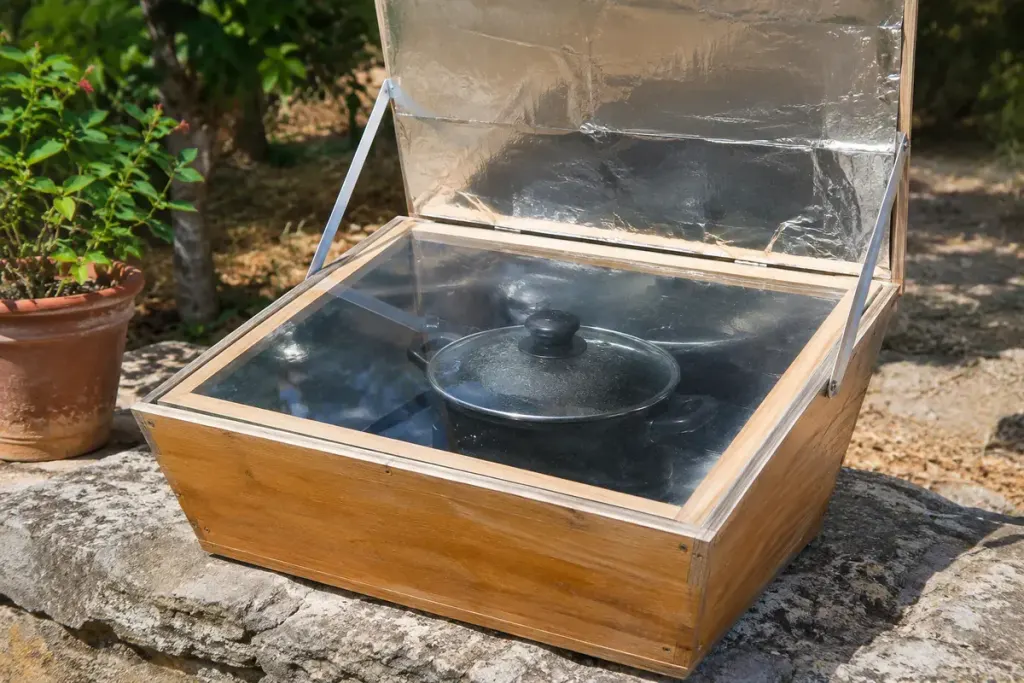
A solar box cooker needs sunlight to reach its cooking area. A bright-looking garden is not enough if a wall, tree or the cooker’s own arrangement blocks the useful light. Start by tracing that route before judging how well the box works.
Solar Cookers International’s practical guide explains the roles of absorbing sunlight and retaining heat. A dark cooking vessel, an appropriate transparent cover and an insulated enclosure serve different purposes. A reflector can direct additional light into the box; it is not a substitute for direct sunshine.
Observe the site through the intended cooking period
Choose a safe, stable position and check how shadows move across it. A spot that is clear at the beginning may be shaded by a building later. Write down the times of those changes rather than assuming that the brightest-looking place stays bright.
Keep reflective glare away from people and neighbouring windows. The equipment should also be positioned where children or passing visitors will not mistake hot cookware for an ordinary outdoor container.
Make a trial a measurement, not a promise
For an initial equipment check, record the cooker design, pot, start time, weather and measured temperature under the manufacturer’s instructions. Note interruptions such as cloud or accidental shading. The same elapsed time under different conditions does not establish the same heating result.
Do not infer that food is safely cooked because the box feels warm or because a demonstration video finished in a particular number of minutes. Use a reliable recipe and appropriate food-temperature guidance, and keep a conventional cooking option available when conditions are uncertain.
After the trial, identify the limiting factor you actually observed. Was the cooking area shaded, was the setup unstable, or did the sunlight change? Alter one relevant part before repeating the check.
Solar cooking can be an interesting way to use available sunlight, but its usefulness depends on the site and the day. A record of real conditions gives you a better basis for planning than treating the cooker as an appliance with a fixed, weather-independent schedule.