
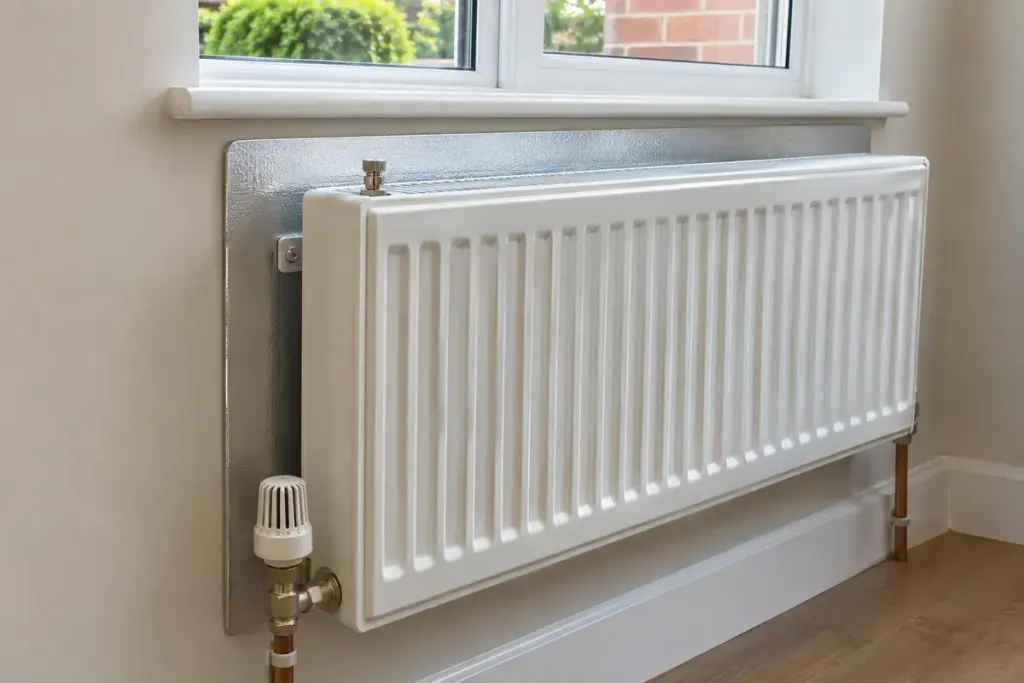
Two radiators may look identical from the room, yet the walls behind them lead somewhere different. One backs onto another heated room. The other faces outdoors. That distinction is a useful starting point when considering a radiator reflector.
A purpose-made reflective panel fits behind a radiator to reduce heat loss through the wall. Energy Saving Trust’s guidance identifies radiators on uninsulated external walls as the most useful locations. It does not recommend fitting panels indiscriminately behind every radiator.
Walk around the room before buying a roll
Draw a quick floor-plan sketch and mark what lies on the other side of each radiator wall. If the wall construction or insulation is unknown, record that uncertainty rather than treating every outside wall as uninsulated.
Next, inspect the space without dismantling the radiator. Look for brackets, pipes and accessible wall area. The product needs to fit the available space and its mounting instructions. Do not assume a panel suitable for one wet central-heating radiator is approved for an electric heater with different clearances.
Energy Saving Trust advises using proper reflector material rather than ordinary kitchen foil. It also recommends allowing the radiator to cool before fitting. Follow both the panel maker’s directions and any relevant heating-equipment instructions; renters should agree the installation with the landlord.
Define a useful result
A neat installation should remain secure, leave the radiator’s required airflow and access clear, and allow normal cleaning and control adjustment. Photograph the finished position for your household maintenance record, then inspect it when you next clean behind the radiator.
A lower bill in one month does not isolate the panel’s effect. Weather, thermostat settings, occupancy and tariffs may all have changed. Keep any savings estimate attached to its assumptions instead of presenting a household before-and-after bill as proof.
The practical decision is modest: choose an appropriate wall, a compatible product and a fitting method you can maintain. Reflector panels can be one part of improving comfort; they do not substitute for assessing the building’s wider insulation and heating needs.