
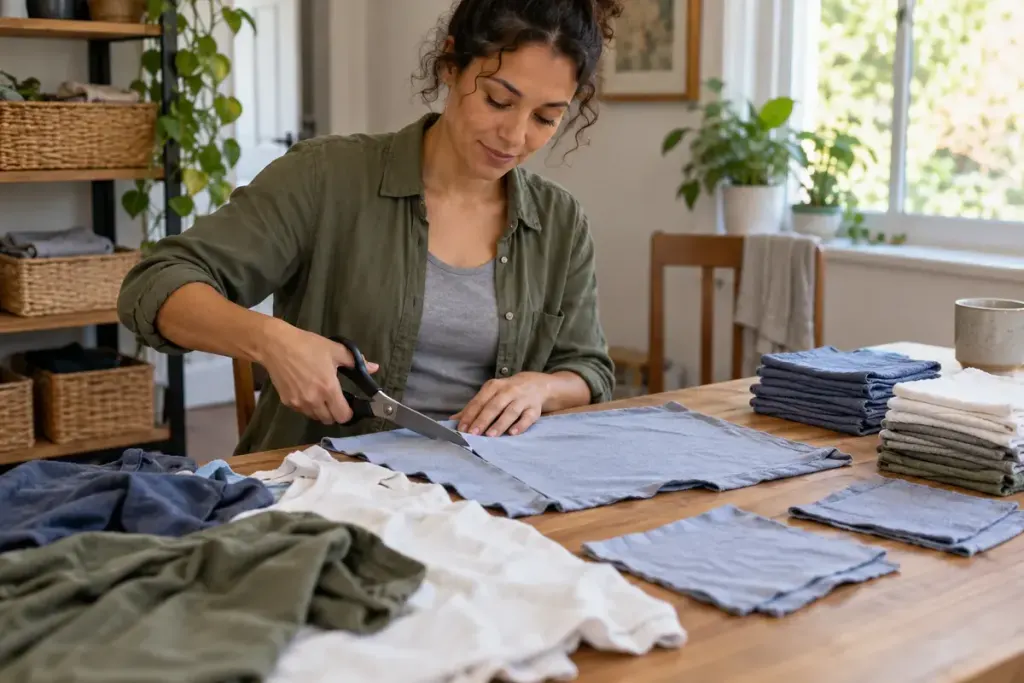
A T-shirt too worn to pass on may still have useful fabric across its back and sides. Turning it into cleaning cloths works best when you decide what the cloths will do before cutting the shirt into random pieces.
The EPA’s special-event waste guide includes using unsuitable-for-donation T-shirts as cleaning rags. The household method below develops that simple reuse idea into a manageable routine. It does not make the cloth sterile or suitable for every cleaning task.
Choose an ordinary job first
Start with clean fabric free from hazardous contamination. Remove bulky seams and printed areas if they interfere with the intended task. Cut one trial piece large enough to fold comfortably in your hand, then use it for an ordinary wipe-down before cutting the rest.
Check whether it leaves lint or colour on the surface. A small test on an inconspicuous area is better than discovering a problem across a mirror or a delicate finish. Follow surface and cleaning-product instructions; reused fabric does not override them.
Keep cloths for different jobs separate and provide somewhere for used ones to go. A basket labelled for washing is more effective than leaving damp cloths scattered around the home. Wash and dry them appropriately before reuse, and discard pieces that become unsuitable.
Do not put cloths contaminated with hazardous chemicals or oily residues into an improvised routine. Those materials can require specific handling and disposal instructions. Use suitable products and procedures for tasks that require disinfection.
Make only the number you can store and use. A drawer full of unwanted rags is not much improvement over a drawer full of unwanted shirts. The useful outcome is a small supply that replaces a real recurring need and has a clear route back through washing.