
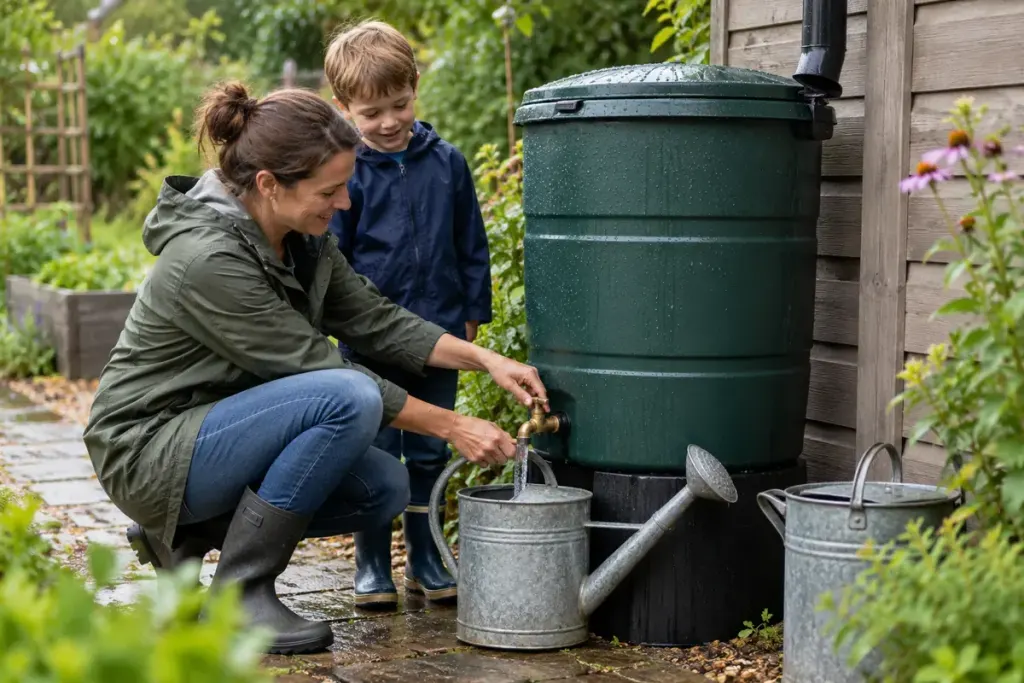
A barrel filling beneath a downpipe makes water collection easy to see. What happens after collection needs just as much planning. Rainwater can pick up contaminants from the air, roof, gutters and storage system, so clear-looking water should not be assumed safe to drink.
The CDC’s rainwater guidance explains that collected rainwater may contain germs and chemicals and stresses separation from safe drinking-water pipes. The intended use determines what safeguards and local requirements apply.
Name the use before choosing the equipment
For a simple garden project, identify which permitted non-drinking uses the system will serve and where the water will be drawn. Check local rules and suitable guidance for any food-growing application. Do not expand the use to drinking, cooking or personal hygiene just because a barrel contains plenty of water.
Choose purpose-designed, securely covered equipment and an appropriate overflow arrangement. Think about access by children, mosquito control, stability and maintenance. A container placed conveniently beside the house can still create problems if overflow undermines a path or collects near an entrance.
Keep the system understandable
Label collection outlets clearly and make sure household members know the water’s intended use. Any plumbing connection requires suitable professional design and compliance with local rules; an improvised connection must not allow collected water into the drinking supply.
Write a maintenance schedule covering the collection surface, gutters, screens and storage equipment according to the system’s instructions. After a long absence or visible contamination, reassess the water and system rather than continuing from habit.
A modest system with a defined purpose is easier to maintain than an ambitious setup with unclear uses. The sustainable benefit comes from water that can be used appropriately and reliably, with its limitations understood by everyone who turns the tap.