
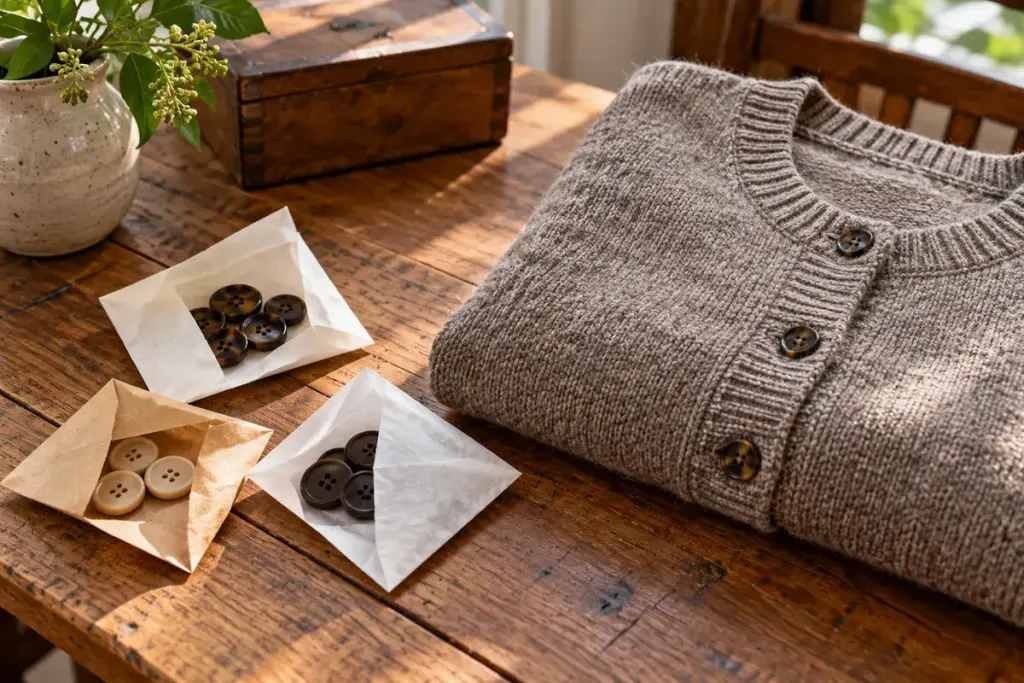
The spare button seemed worth keeping. Months later, it sits in a jar with twenty others, and the cardigan missing a button is somewhere else. Saving a small part is only useful if you can identify it when the repair becomes necessary.
A simple storage habit can remove that search. It does not require a complete sewing kit or a new collection of organisers: a small envelope and a clear description are usually enough to start.
Give the button an identity
When unpacking a new garment, put its supplied spare in an envelope marked with the garment’s type, colour and a distinctive detail. “Navy cardigan, ribbed cuffs” is more useful than “blue.” If you own several similar items, add a photograph reference or a purchase note you can recognise later.
Check what is actually included. A packet may hold different button sizes for a cuff and front opening. Keep them together, but note the difference so you do not mistake one for a poor match.
Store the envelope with repair supplies somewhere dry and inaccessible to young children and pets. Loose small parts need secure storage. Avoid leaving a needle tucked into an envelope where someone could reach for it unknowingly.
Check the match before starting
Place the spare next to the remaining buttons in good light. Compare size, thickness, colour and the way it attaches. A similar colour does not guarantee that the replacement will pass through the buttonhole comfortably.
If you plan to do the repair yourself, consult instructions appropriate to the garment and fastening. Delicate fabrics, unusual construction or a damaged buttonhole may call for a repair professional. Keep the care label available rather than assuming the spare can be treated independently of the garment.
When passing the clothing to someone else, include its labelled spare. When a garment is no longer kept, review the envelope rather than letting it become another unidentified object.
The goal is not to save every possible component forever. It is to make the small parts you do keep easy to find, recognise and use when a straightforward repair can return a garment to everyday wear.