
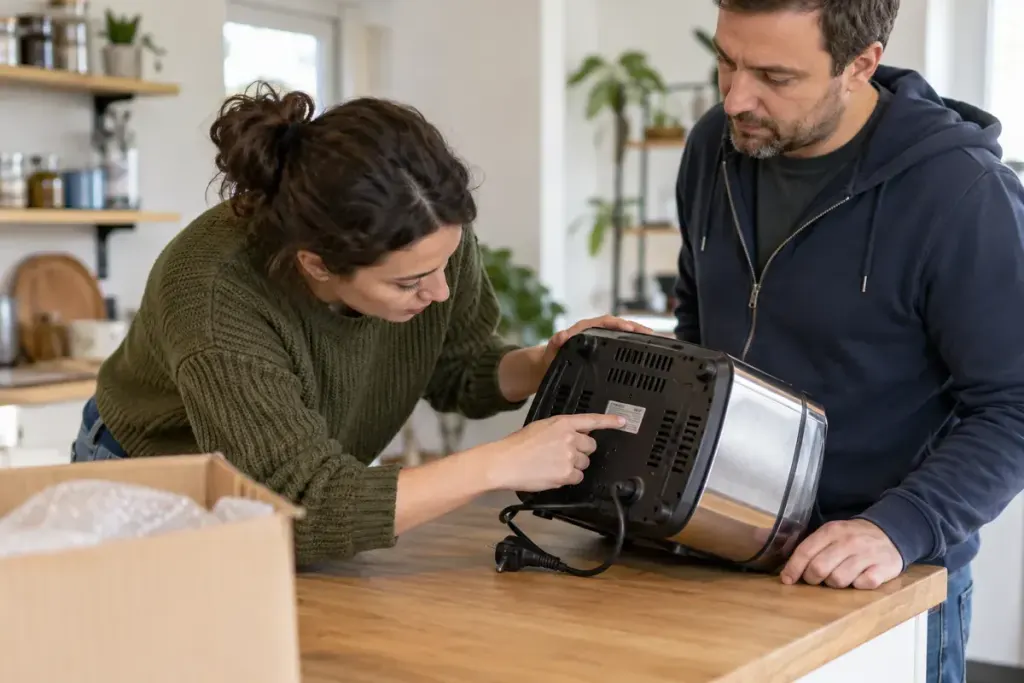
A used appliance can keep a useful product in circulation, but a low price does not answer whether it is safe to use. Before making space for it at home, establish exactly what it is and whether its condition can be assessed reliably.
Start with the product identity
Find the manufacturer, model and serial information. Compare those details with the manufacturer’s instructions and recall notices for your country. A general brand search is not enough when a notice applies only to particular models or production ranges.
Electrical Safety First’s guidance on saving money safely includes checks for second-hand electrical goods. Its plug and regulatory examples are UK-specific; elsewhere, use the relevant local product-safety authority and electrical requirements.
Inspect without powering a questionable item
With the appliance disconnected, look for obvious damage to the casing, cable and plug, missing parts, scorch marks or signs of an improvised repair. Ask about its history and why it is being sold. Missing answers are uncertainty, not proof that the item is sound.
A tidy exterior cannot establish electrical safety. Do not open an appliance or attempt repairs beyond your competence. If its condition is uncertain, seek an appropriately qualified assessment before use or leave it unpurchased.
Include the cost of making it usable
Check whether the required accessories and instructions are available. Consider inspection, authorised repair, transport and installation costs before comparing the total with another option. A bargain that needs an unavailable safety component may not be a practical purchase.
For appliances requiring professional installation, arrange that work through a suitable installer. Do not adapt a plug or electrical supply simply to make an incompatible product operate.
If the item is recalled, follow the official remedy rather than selling it onward as someone else’s problem. Reuse works best when a product has a safe, appropriate next life—not merely when it changes hands.