
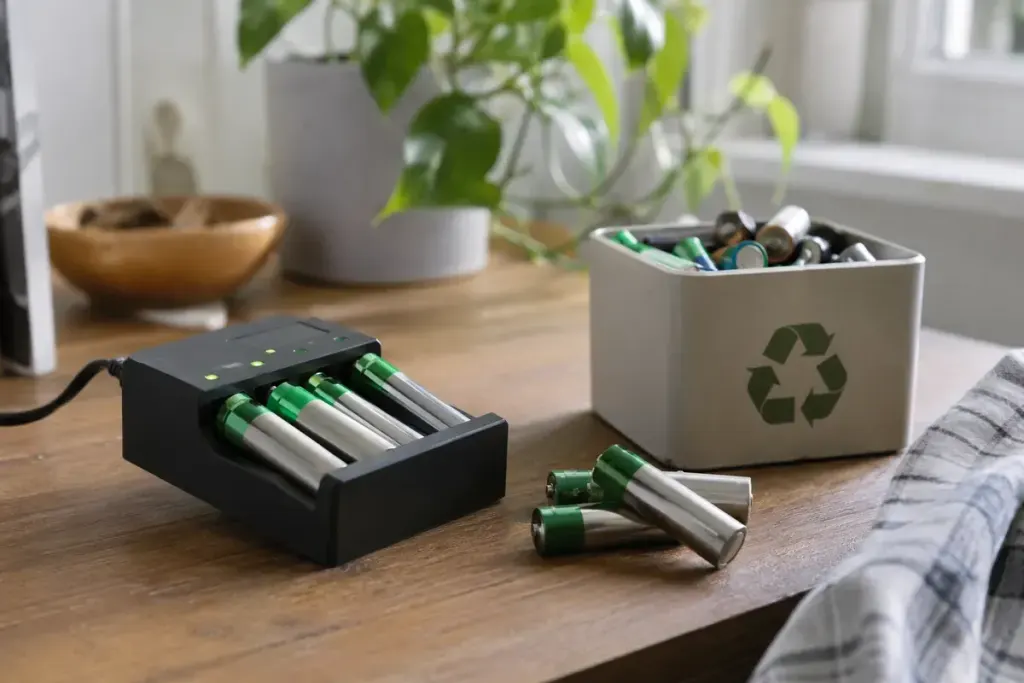
A rechargeable battery is useful when it fits the device and the charging routine. Buying one with a familiar shape is not enough. Chemistry, voltage, and charger compatibility matter, and a single-use battery should not be placed in a charger simply because it fits the slot.
Read the battery, device, and charger instructions together. Use only combinations the manufacturers specify. If a marking is worn away and you cannot establish what the battery is, do not guess from its colour or size.
Keep the routine easy to follow
Store charged, depleted, and retired batteries separately in suitable containers, away from children and anything that could short the terminals. Avoid leaving loose batteries mixed with keys or coins. Follow the charging instructions about location, temperature, supervision, and when charging is complete.
If a battery or charger shows damage, unusual heat, swelling, or leakage, stop using it and obtain manufacturer guidance. Do not puncture, open, or attempt to repair a damaged battery at home.
Know where the old battery will go
The US Environmental Protection Agency’s household battery guide explains that rechargeable batteries need appropriate collection rather than ordinary rubbish or municipal recycling bins. It also describes precautions to prevent terminals contacting other materials. Local collection rules should be checked with your waste authority or participating retailer.
Ask the collection service about damaged batteries before transporting them; they may require different handling. For batteries built into a device, follow the manufacturer’s removal guidance or use an appropriate electronics collection route rather than forcing the casing open.
A small household note can identify which charger belongs to which battery type and where retired items are accepted. That turns a sustainability purchase into a complete routine: compatible use, safe charging, and a clear destination when the battery no longer serves its purpose.