
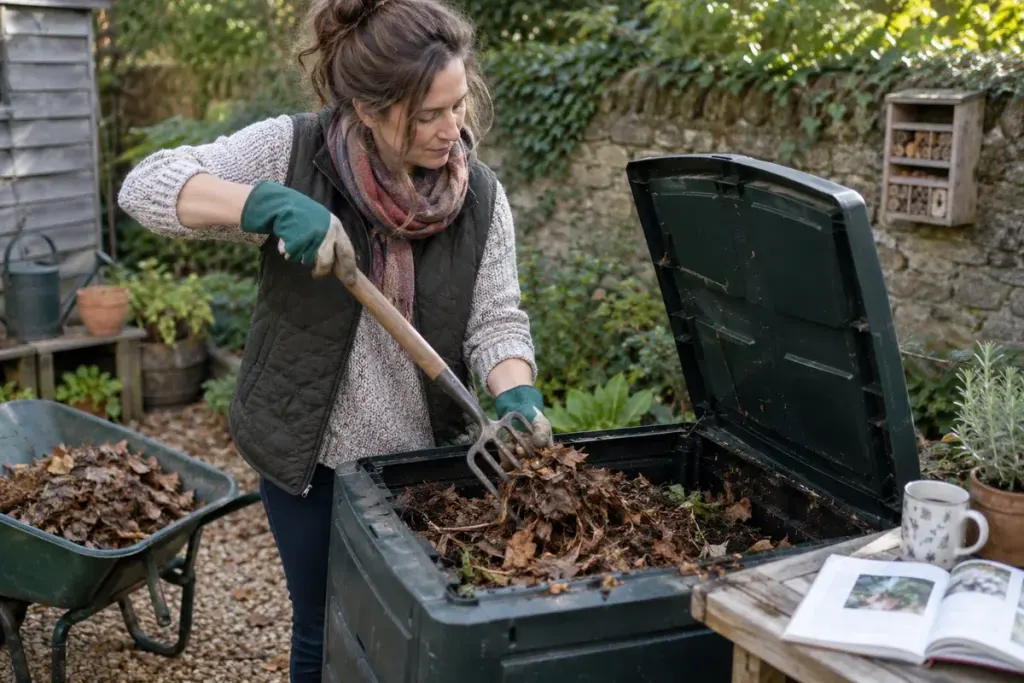
A compost bin that smells unpleasant is not automatically a failed project. It is giving you information about the conditions inside. Before adding a commercial remedy, look at what has gone in and whether the material is too wet or compacted.
Home composting relies on a suitable mix of materials, moisture and air. A dense layer of wet food scraps behaves differently from a mixture that includes dry, bulky material. The aim is to adjust the conditions, not simply hide the smell.
Check moisture and structure together
The US Environmental Protection Agency’s home composting guide notes that bad odour can indicate excess moisture or insufficient air circulation. It also explains suitable materials and the role of balancing greener and browner inputs.
If the mixture is soggy and packed down, add appropriate dry material and improve aeration using a method suited to the bin. Break up dense layers where practical. Avoid treating every problem with more water simply because decomposition is involved.
Check whether rain is entering unnecessarily and whether the bin’s design allows drainage and air as intended. Follow the manufacturer’s instructions for enclosed systems; a tumbler, worm bin and open compost heap do not all work in the same way.
Review what you are adding
Keep inappropriate materials out of a basic home system. Meat, greasy food and other problematic additions can attract pests or create conditions the setup is not designed to handle. Local collection schemes may accept materials that your garden bin should not, so distinguish the two.
- Notice whether the mixture is dry, damp or waterlogged.
- Look for compacted layers.
- Add suitable dry material when needed.
- Review recent inputs and the bin instructions.
- Observe the response before making another major change.
Use appropriate hygiene when handling compost: protect cuts, wash hands afterwards and avoid breathing dust from dry material. If pests become established or the system is unsuitable for the available space, seek local composting advice rather than continuing the same routine.
A short note about what changed can help you learn the bin’s behaviour through different seasons. Composting is easier when small adjustments respond to observations. A healthier-smelling mixture is useful feedback, while finished compost still needs time to become a stable, usable material rather than recognisable fresh scraps.