
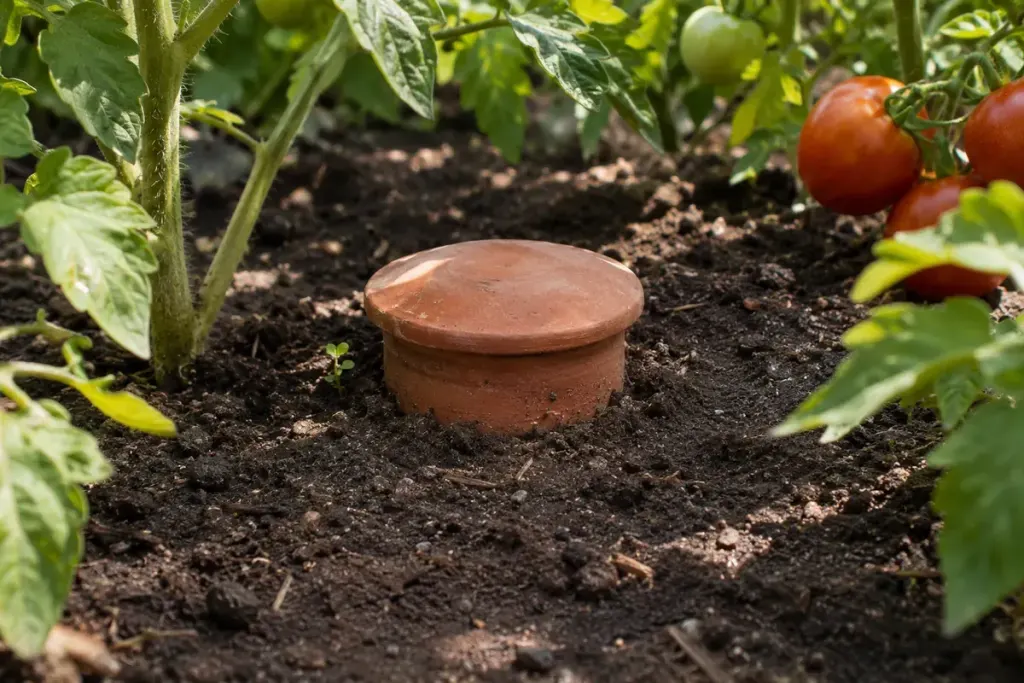
In an olla-irrigated bed, most of the watering vessel disappears underground. A narrow opening remains available for filling, while porous clay allows water to move into the surrounding soil. The idea is simple, but its usefulness depends on the pot, the planting and the soil around it.
Oregon State University Extension’s watering guidance describes buried porous containers among garden-watering approaches. An olla needs unglazed, water-permeable walls; an attractive glazed storage jar does not work on the same principle.
Begin with a small, observable area
Choose a purpose-made vessel and follow its placement guidance. Bury the body while keeping the filling opening accessible, and cover that opening as directed. Place plants within the intended watering area rather than assuming one pot can supply an entire bed.
During the first weeks, check moisture where the roots actually are. A dry-looking surface does not tell the whole story, but neither does water remaining inside the pot prove that every nearby plant has access to it. Newly established plants may need separate surface watering until their roots reach the supplied area.
A useful garden note has more than a refill date
- Record which plants are nearby and how recently they were planted.
- Note the weather and whether rain supplied additional water.
- Observe moisture near the root zone without damaging roots.
- Record the amount added and any signs that the arrangement needs adjusting.
There is no universal number of days between refills. Pot size, soil properties, weather and plant demand all influence the result. Compare observations from your own bed before treating an online timetable as a promise.
The same caution applies to water-saving claims. If you want to evaluate the change, record actual water added and consider rainfall and plant growth. A practical success is healthy planting supplied appropriately with a manageable routine. The quiet appeal of an olla is that it can simplify a small watering area, not that it removes the need to notice what the garden is doing.