
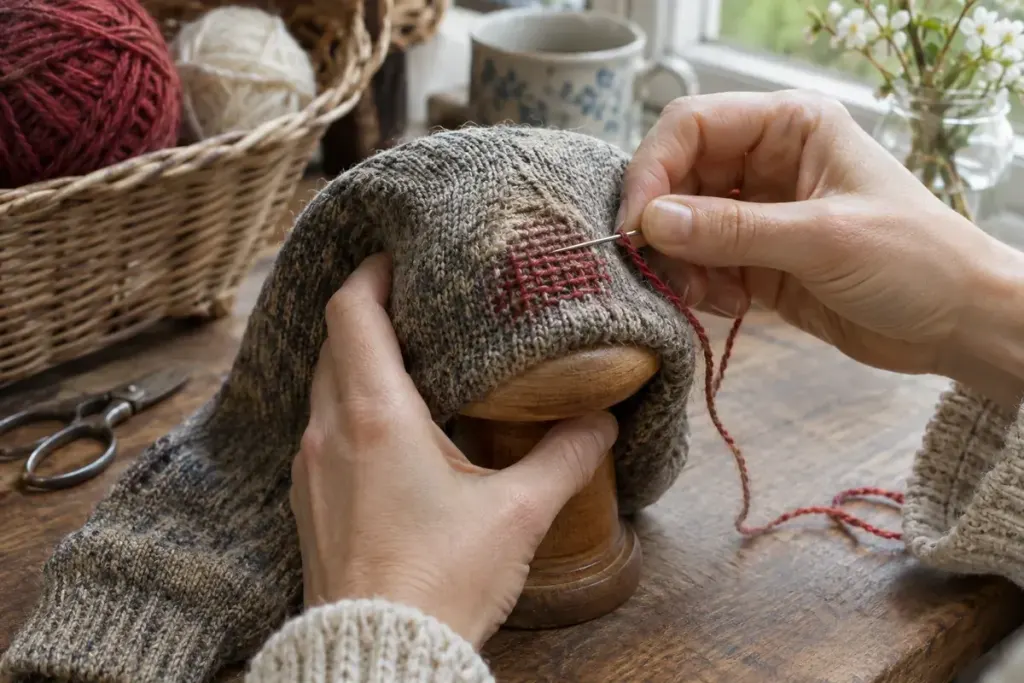
A thinning patch in a sock offers a useful chance to practise repair before it becomes a large hole. Darning builds a small network of threads across the worn area, reconnecting it with stronger fabric around the edges.
In Patagonia’s conversation about mending, darning is described as recreating fabric through a woven repair. It is different from simply pulling the sides of a hole together, which can shorten or distort the material.
Choose a forgiving first project
Start with an ordinary item you can work on comfortably. Inspect the area around the hole: if a much larger section is fragile, a tiny repair may anchor into fabric that is already failing. Match the repair yarn to the weight and use of the garment rather than choosing only by colour.
A darning mushroom or a smooth suitable support can hold the area open. Avoid stretching the sock tightly over it. The repair should fit the fabric’s relaxed shape, not a temporarily enlarged one.
Build a small woven patch
Lay parallel strands across the damaged area, securing them into sound fabric beyond it. Then work across those strands, alternating over and under to form the weave. Keep the tension gentle enough that the patch does not pull into a hard, puckered island.
On a first attempt, pause halfway and remove the support briefly to check the shape. It is easier to correct a few tight rows than to unpick a completed stiff patch. A contrasting yarn can make the structure easier to see while learning.
After finishing, try the item on and check comfort. A bulky repair beneath the foot may rub even if it looks tidy. Washing and care should suit both the original garment and the repair material.
Darning is useful for extending the life of everyday textiles, but a decorative repair does not restore certified protective performance. For ordinary socks and household fabric, the reward is simpler: a worn area becomes usable again, and the next small repair feels less mysterious.