
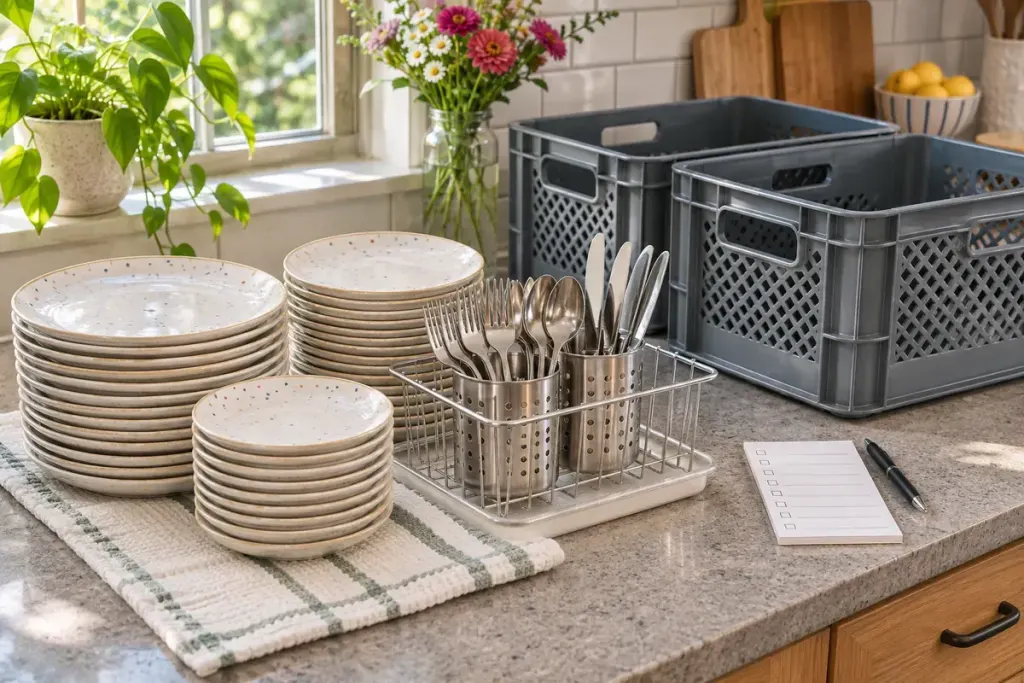
Borrowed plates can replace a pile of disposable tableware at a party, but the useful system extends beyond collecting a box. Someone needs to count the items, wash them correctly and return them in a condition the next borrower can use.
The following is a practical planning example for a neighbourhood borrowing arrangement. Adapt it to the lender’s own conditions, especially if a washing service, deposit or specific return deadline is already included.
Count at the two handovers
At collection, record the quantities of plates, cups, bowls and any serving pieces separately. Check for existing damage together. A photo of the packed kit can help show how it should be returned, but it should not replace a clear count.
At the event, choose a visible return point for used tableware. Keep it separate from waste bins so guests do not discard reusable pieces by habit. Tell helpers which items belong to the kit and which belong to the venue.
Agree the washing before the party
Ask which items are dishwasher-safe, what cleaning method the lender requires and whether they must be completely dry before packing. Do not assume every reusable cup tolerates the same temperature or cleaning product.
If the venue has no suitable washing facilities, plan how used items will be transported securely for cleaning. Keep dirty and clean items separate. A vague promise to “sort it later” can become a problem when the kit is booked again the next morning.
Make the return easy to check
Recount by item type, report losses or damage honestly and use the agreed return time. Packing damp items into a closed box to meet a deadline is not a useful shortcut; contact the lender if the arrangement needs to change.
Afterward, note what would improve the next event: a larger return tray, clearer signage or fewer cup sizes. Reuse becomes more dependable when the small practical steps are designed well. The environmental benefit of a particular kit depends on its materials, use and washing, but keeping existing items in service starts with returning them ready for another round.