
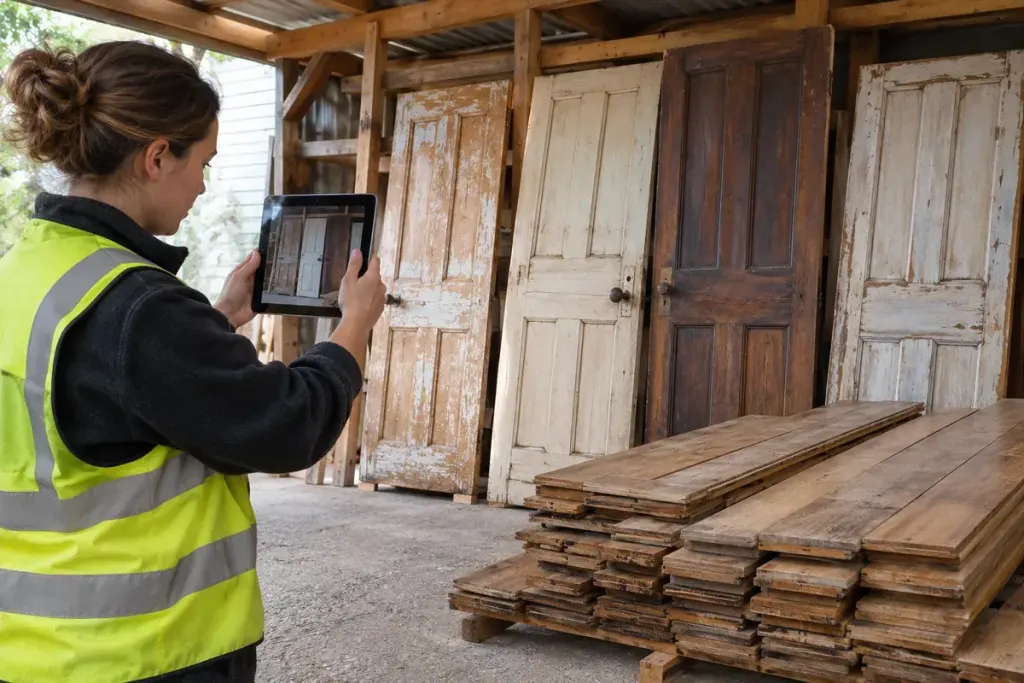
Once a fitting is broken during demolition, its reuse options shrink. A deconstruction inventory starts earlier: it records what is present and which items might be removed intact for continued use.
The U.S. EPA’s construction-material guidance discusses reuse and deconstruction alongside recycling. The inventory is a planning aid, not a guarantee that every old component is safe, saleable or economical to recover.
Make each entry useful to another person
For a potentially reusable door, note its dimensions, material if known, condition, hardware and location. Add clear photographs of both sides and any damage. “Several nice doors” is much less useful to a recipient or contractor than individual entries that can be matched to real objects.
Include the proposed destination: reuse in the project, transfer to a confirmed recipient, assessment by a salvage organisation or another appropriate route. Identify who will confirm acceptance, when removal can happen and where the item can be stored safely.
A simple record can use these fields: item, location, measurements, condition, quantity, photograph reference, proposed recipient and decision. Add uncertainty openly instead of filling gaps with guesses.
Keep assessment ahead of removal
Older materials can contain hazardous substances, and building work can involve structural, electrical or other risks. Have competent professionals assess the work and applicable requirements. Do not disturb suspected hazardous material or remove structural components because they appear on a reuse list.
Ask potential recipients about their acceptance criteria before paying for careful dismantling. A component may be intact yet unsuitable for a new use or unable to meet current requirements.
After the work, update the inventory with what was actually recovered and where it went. This distinguishes an intention to reuse from a completed transfer. A smaller number of documented, usable items is a more meaningful outcome than a long list of materials with no destination.