
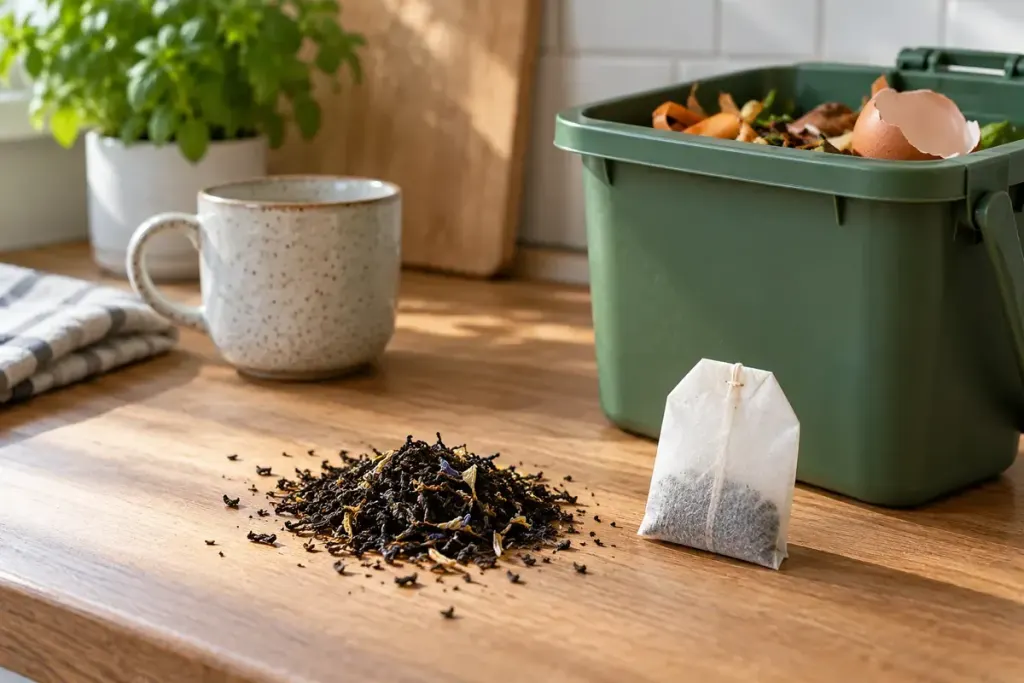
A used tea bag contains at least two things to consider: the tea and the material holding it. The leaves may suit a home compost system while the bag, seal, string or tag needs a different route.
Words such as “plant-based”, “biodegradable” and “compostable” do not all describe the same conditions. A material accepted by an industrial process may remain visible for a long time in a cooler home compost heap.
The RHS discussion of winter composting includes this distinction for tea bags containing PLA, a plant-derived plastic that may require hotter composting conditions. The practical lesson is to check the product’s specific disposal guidance rather than infer it from the appearance of a paper-like bag.
A three-part check at the kitchen counter
- Identify the exact tea product. Packaging and materials can change, and different ranges from one brand may use different bags.
- Read the disposal instruction. Look for an explicit home-composting claim or a specified collection route, not just a broad environmental phrase.
- Check the receiving system. Your council or compost operator decides what it accepts; a manufacturer’s general suggestion does not override that list.
If the bag’s material is uncertain, open it and add the tea leaves to a suitable compost mix, then dispose of the outer parts according to local guidance. Take care with hot contents and any staples.
Do not use the disappearance of the bag as the only test. A material can fragment without meeting the conditions expected of a compostable product. Conversely, a visible remnant in an immature heap does not by itself prove that a certified product was falsely labelled.
Keep tea leaves as one ingredient in a varied compost system rather than building a wet, compact layer of them. Follow the method appropriate to your bin or heap.
For future purchases, loose-leaf tea with a reusable infuser can simplify this particular material question if it suits your routine. The immediate goal is modest: send each part of today’s cup to a route that actually accepts it.