
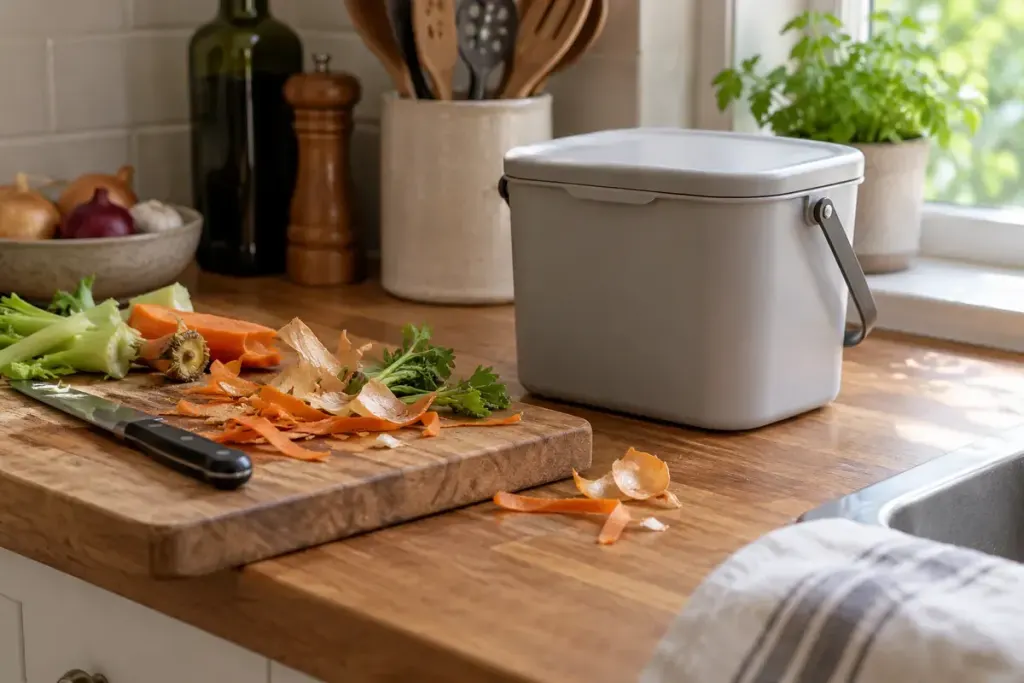
A large food-scrap container seems convenient until it stays half full on the counter for too long. Capacity is only useful when it matches how often you can empty and clean the container.
Start with the destination. Your municipal collection, community scheme or home compost setup determines what belongs in the container. Check its current accepted-materials list, including the rules for liners. A bag labelled compostable is not automatically accepted by every service.
Choose the routine before the size
Think through an ordinary day of cooking. Where do peelings appear? Where can the container sit without crowding preparation space? Who takes it to the collection point, and when is that trip realistic?
A modest, easy-to-wash container that is emptied frequently may suit a small kitchen better than a large one chosen to avoid trips. The right answer depends on household use, local conditions and the collection schedule; there is no universal number of days that makes stored scraps problem-free.
Look for accessible corners, a lid and handle that can be cleaned, and materials suitable for the intended use. A removable inner bucket can help only if it is also comfortable to carry when loaded.
Make emptying part of the next step
Link the task to something that already happens, such as clearing the kitchen after the main meal. Check the container then rather than waiting for a smell or a completely full lid.
Empty it into the correct destination, clean it according to its instructions and let it dry as appropriate before reuse. Keep it separate from food-storage containers so its purpose remains clear. If pests or persistent odours appear, review the location, cleaning and emptying routine rather than covering the problem with fragrance.
In an illustrative household arrangement, the person finishing the dishes checks the scrap container while another takes out the permitted recycling. Assigning a small, visible task works better than assuming that whoever notices first will deal with it.
The container supports the routine. It cannot create one on its own.