
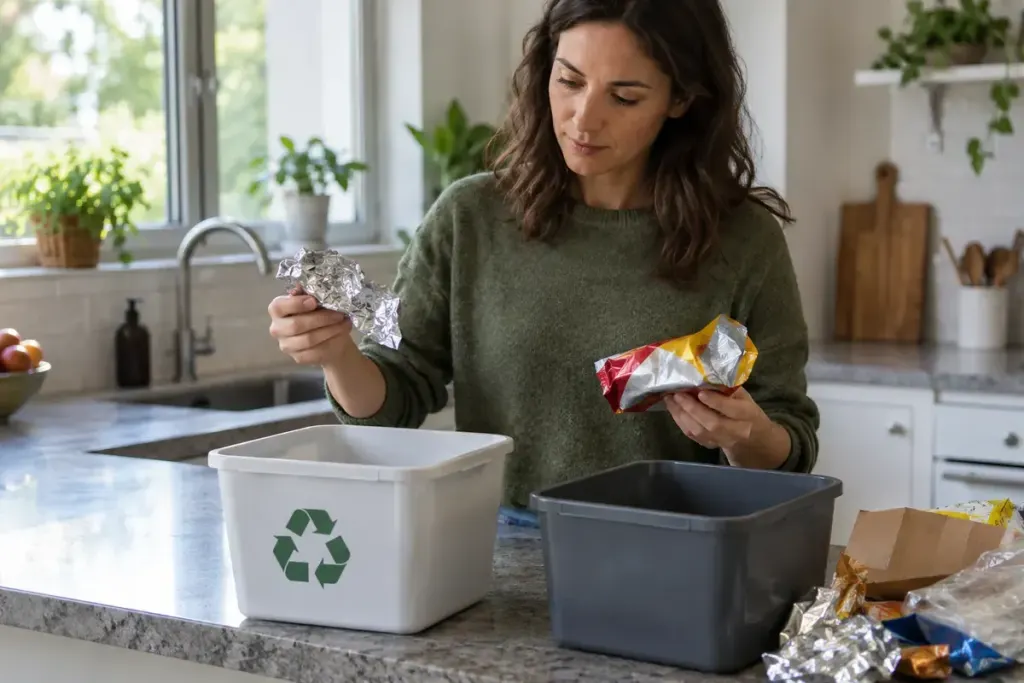
A shiny wrapper is not automatically aluminium foil. Some flexible packaging is plastic or a combination of materials, and appearance alone does not establish which collection can accept it.
Start with the packaging information and your local recycling service’s rules. Search for the exact material or item type rather than treating all reflective kitchen waste as one category.
Prepare accepted foil as your service requests
In the UK, Recycle Now’s foil guidance advises removing food residue and bringing small pieces together into a larger ball. It also describes a scrunch test as a way to distinguish ordinary foil from some shiny films. That is a useful clue, not a replacement for checking a complex wrapper’s label or local acceptance rules.
If the service accepts the item, use a proportionate cleaning method. Foil trays can often be wiped or dipped in used washing-up water as the guidance describes. There is little sense in turning a small recycling task into an unnecessarily water-intensive routine.
Keep uncertain packaging out of a guesswork pile
A snack packet and a sheet of kitchen foil may both shine, yet belong to different collection routes. Keep them separate while you check. Do not hide an uncertain item inside a ball of known aluminium just to make the bin look tidier.
For a shared household, put a short current note near the recycling area with the locally accepted items and a link or printed reference. Date it so an old rule does not remain on the wall after collections change.
If an item is heavily contaminated or the material cannot be identified, follow the local service’s advice. Adding it “just in case” can make sorting harder rather than improve recovery.
The useful habit is a sequence: identify the material, confirm the route, and prepare it as requested. A reflective surface is the start of the question, not the answer. Small, repeatable decisions make a household recycling routine more reliable than a bin filled according to appearance.