
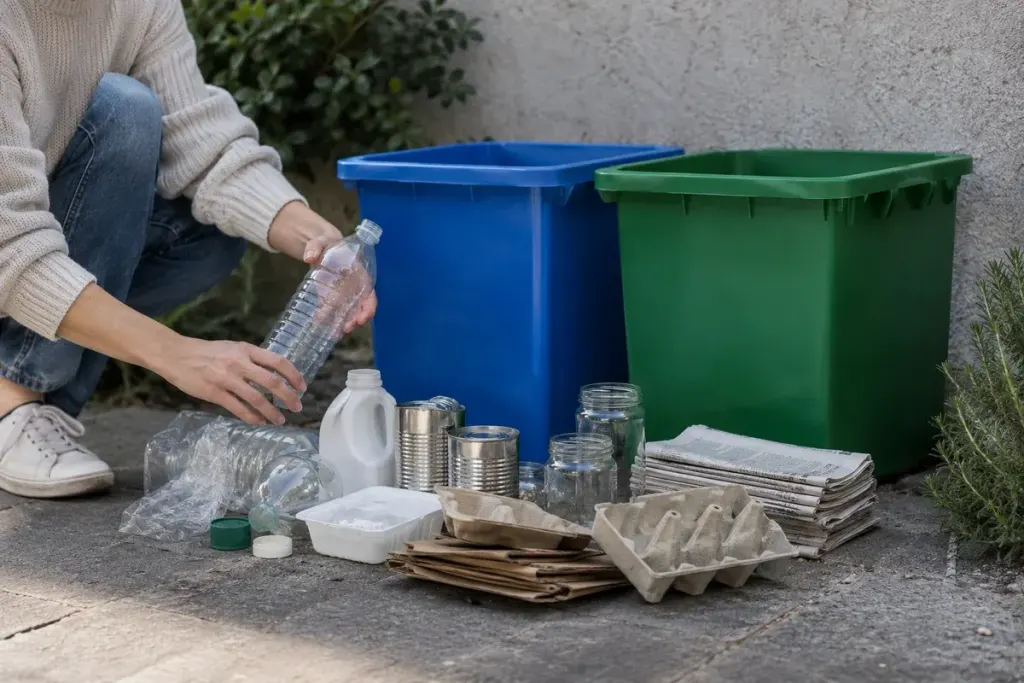
A plastic container carries a familiar symbol, so into the recycling bin it goes. The symbol may identify the material, but it does not promise that the local collection system can process that particular item.
The US EPA’s recycling guidance makes this distinction and recommends checking the local programme. Acceptance can depend on the item’s form as well as its material: a bottle, film and rigid tray are not necessarily handled through the same route.
Use the current local list
Find the authority or service provider responsible for your collection. Check accepted items, preparation instructions and exclusions. Save the date of the guidance, particularly if the programme has recently changed.
Follow its instructions about emptying, rinsing, lids and loose versus bagged materials. Do not assume that putting uncertain packaging inside another recyclable container makes it easier to sort. Keep batteries, hazardous items and other special wastes out of ordinary recycling unless the programme explicitly directs otherwise.
Resolve one recurring uncertainty
Choose an item you discard often, such as a food tray or refill pouch, and verify its route. If the official list is unclear, ask the provider with a description or photograph. A clear answer for a frequent item is more useful than guessing about dozens of rare ones.
Make a small household note near the bin using the actual accepted examples. Avoid an enormous poster of generic symbols that does not match the local service. Update the note when the collection rules change.
If an item has no available recycling route, do not invent one by placing it in the bin anyway. Consider reducing that packaging in future purchases where practical. Correct sorting and thoughtful purchasing address different parts of the problem, and both begin with knowing what happens locally.