
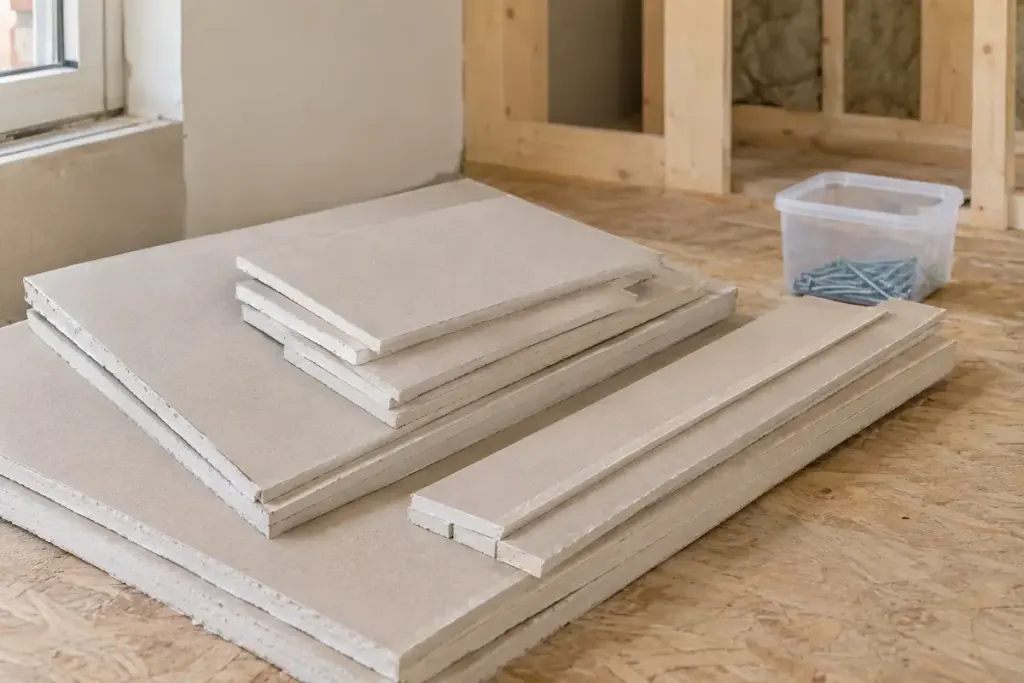
After cutting plasterboard to fit a room, the remaining strips may still be clean, recognisable pieces of a known product. Keeping them separate at that moment can preserve a recycling option that becomes harder to use once they are mixed with wet rubble and miscellaneous waste.
Gypsum recycling is a specific collection route, not a reason to put every board-shaped material in the same container. The recycler’s acceptance rules decide what belongs there.
Start with the product and the source of the waste
British Gypsum’s recycling service describes recovering gypsum from accepted plasterboard waste for use in new boards. Its published service covers new-build waste and scrap from new products, with restrictions for particular board types. That example should not be read as a promise that an unrelated local collector accepts old demolition plasterboard.
For a small renovation, retain the product details from new boards and ask the chosen waste service about those exact materials. Laminated, insulated or otherwise combined products may have different requirements. Do not guess that every facing or backing should be stripped off; follow the receiving service’s instructions.
If the waste comes from an existing wall with unknown layers, describe that honestly. A clean new offcut and a piece removed from an old building are different waste streams, even when the exposed core looks similar.
Give the collection point a clear job
Set aside a dry, clearly identified place for accepted offcuts before cutting begins. Tell everyone using it what can go in. A convenient empty container can quickly become a general rubbish bin unless its purpose is obvious.
Keep fasteners, packaging and other waste in their designated streams. Follow the collector’s storage and handling instructions, including any limits on size, bags, moisture or collection quantity. A small household job may need a different arrangement from a contractor’s site collection.
Before paying for a service, confirm the destination and acceptance terms rather than relying only on the word “recycling.” The practical success is a load the receiver can actually use. Separation at the workbench makes that possible, but it does not replace checking the route in advance.