
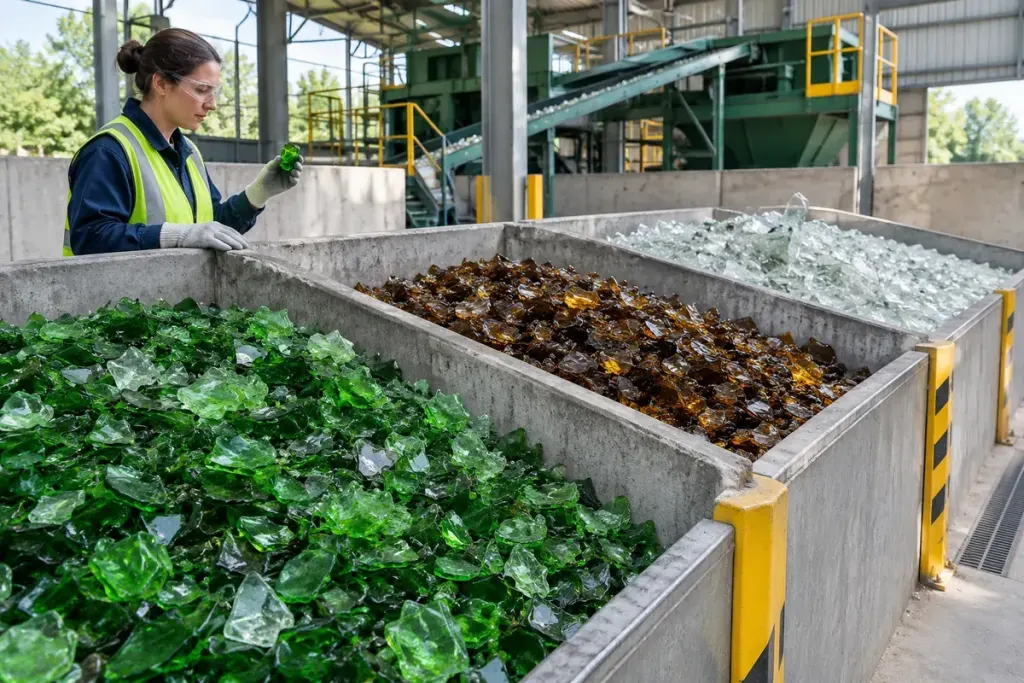
A bottle placed in a recycling container is only at the beginning of its next journey. Before recovered glass can become a useful furnace ingredient, it must be processed into material with a suitable composition and contamination level. That prepared broken glass is known as cullet.
Broken glass becomes a raw material
The Glass Packaging Institute’s industry guide explains the role of recycled glass in making new containers. Using suitable cullet can reduce the requirement for virgin raw materials and the energy involved in the melt. The benefit depends on a functioning collection and processing route, not simply on calling an object recyclable.
Colour and material quality matter to the next product. A furnace producing a particular container glass needs an appropriate feedstock, rather than an unexamined mixture of everything that looks transparent.
Why a broken mug is a different question
The recycling industry’s glass cullet specifications distinguish container glass from ceramics and various other glass products. Drinking glasses, mirrors, heat-resistant cookware and bottles should not be assumed to share the same collection route.
For households, the practical instruction is to follow the local collector’s accepted-material list. Rules about lids, colours and broken items can differ. A general article cannot replace the instructions for your own service.
Make the sorting point easier to use
Consider a shared kitchen with a glass collection box. A label saying only “glass” leaves people to guess about a cracked baking dish. A short list of accepted containers, copied accurately from the local service, gives users a more reliable decision.
Keep excluded items out of the box while you find their correct disposal route. Do not crush glass by hand to make it resemble industrial cullet or fit more into a container. Processing belongs downstream with appropriate equipment.
When checking a recycling claim, ask where the material goes and what it becomes. Collection, sorting and actual use in a new product are distinct stages. Knowing that sequence makes a simple household action more informed: the aim is to supply suitable material to the next stage, with as little avoidable contamination as possible.