
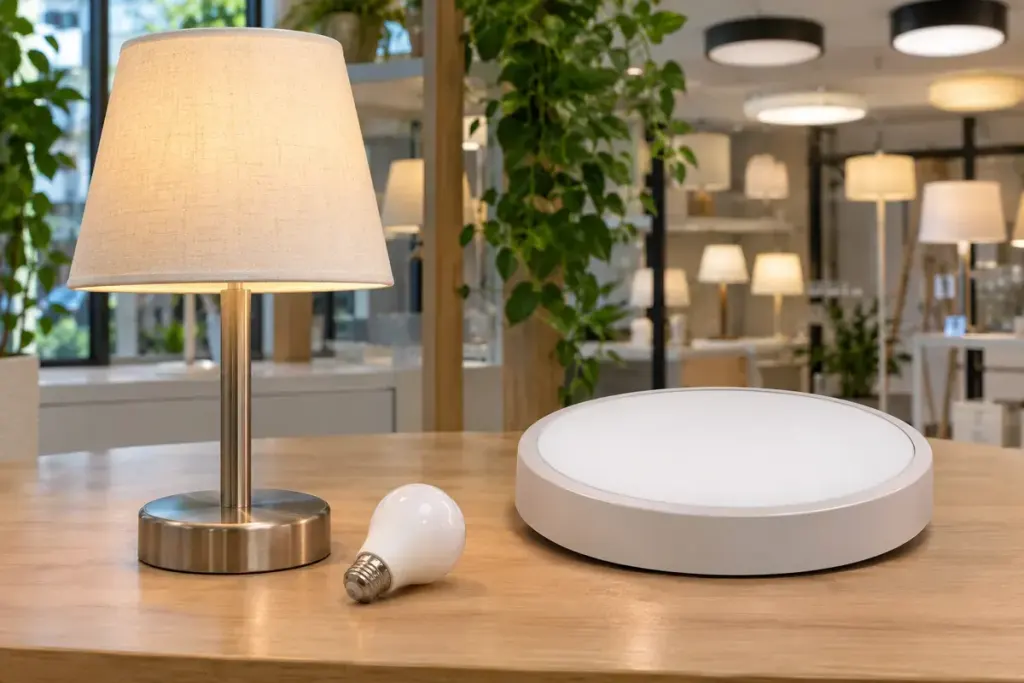
A light fitting can look like a long-term purchase while hiding an important detail: what happens when its light source or driver fails? Before buying, ask about those parts separately.
Replaceable by whom?
A lamp with a standard replaceable bulb offers a different maintenance route from a fitting with an integrated LED module. Yet “integrated” does not automatically mean every component is impossible to replace. The product instructions may allow replacement only by the manufacturer, a service agent or another qualified person.
For example, Signify’s instructions for a particular luminaire distinguish non-user-replaceable components from work permitted to qualified personnel. That distinction should be checked for the exact model, not transferred to every light sold under the same brand.
Ask for a service path, not only a lifespan figure
- Can the light source be replaced, and by whom?
- Is the driver a separate serviceable part?
- Are replacement parts identified and available?
- What happens if a part is unavailable during the warranty period?
- How is the fitting removed or accessed for authorised service?
A claimed operating life describes particular test assumptions. It is not necessarily the same as a warranty, a spare-parts promise or the number of years the complete fitting will serve in your room.
Consider the location of the fitting
A ceiling light above a stairwell can be more costly to access than a table lamp. Include safe access and professional labour in your comparison. For a room with several matching fittings, ask how a later replacement might differ in colour or appearance.
Keep the model number, invoice and installation instructions somewhere accessible. A photograph of the product label taken before installation can make a future service enquiry easier.
This is a purchasing checklist, not an invitation to open electrical equipment. Follow the instructions and use qualified help where required. Choosing a product with a clear repair route can reduce uncertainty later, while leaving electrical safety and compatibility to the appropriate service process.