
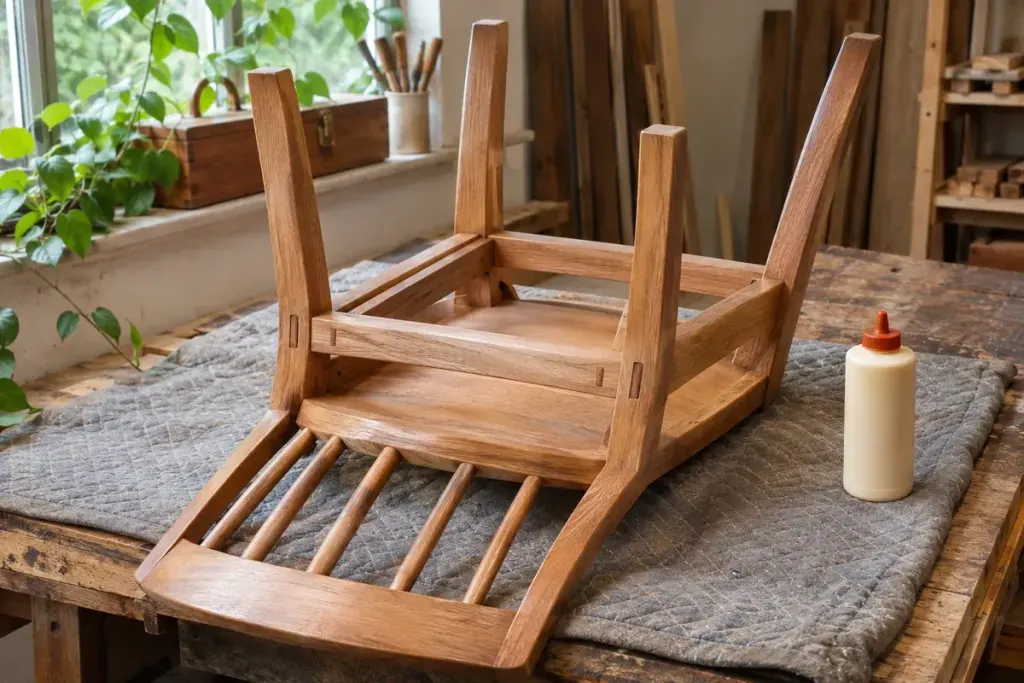
A chair rocks beneath someone, and the first impulse is to tighten everything or squeeze glue into the nearest gap. Begin by taking it out of use. A repair makes more sense once the moving part has been identified.
With the chair unloaded on a stable surface, observe whether the movement comes from a loose fitting, an opening joint, a damaged component or uneven contact with the floor. Do not use another person as the test load while investigating a questionable structure.
A joint and a crack are different problems
A fastening intended to be tightened may need a different response from a glued joint that has opened. Split wood, distorted hardware or a failed structural component can make a simple home repair unsuitable. Valuable or historic furniture deserves advice from an appropriate furniture specialist or conservator.
Titebond’s adhesive guidance explains why product suitability, surface preparation and assembly conditions matter. Glue placed over dirt, finish or an inaccessible failed joint is not automatically a sound structural repair.
Make a repair decision before a shopping list
Record the chair’s construction and the exact location of movement. Ask whether the joint can be properly assessed and prepared, whether components are damaged and whether you have the skills and equipment for the required work.
A useful enquiry to a repairer might include photographs of the whole chair and the affected connection, with a description of when movement occurs. Avoid forcing a joint apart just to improve the photograph.
If a repair is appropriate, follow the chosen product’s instructions and the repairer’s guidance, including preparation, assembly and curing requirements. Do not return the chair to service simply because excess adhesive feels dry.
Keeping furniture in use can reduce unnecessary replacement, but only when the result remains safe and functional. Sometimes the responsible choice is a professional repair or retiring a failed chair. Finding the movement first helps prevent wasted materials and distinguishes a manageable maintenance task from a structural problem that needs more expertise.