
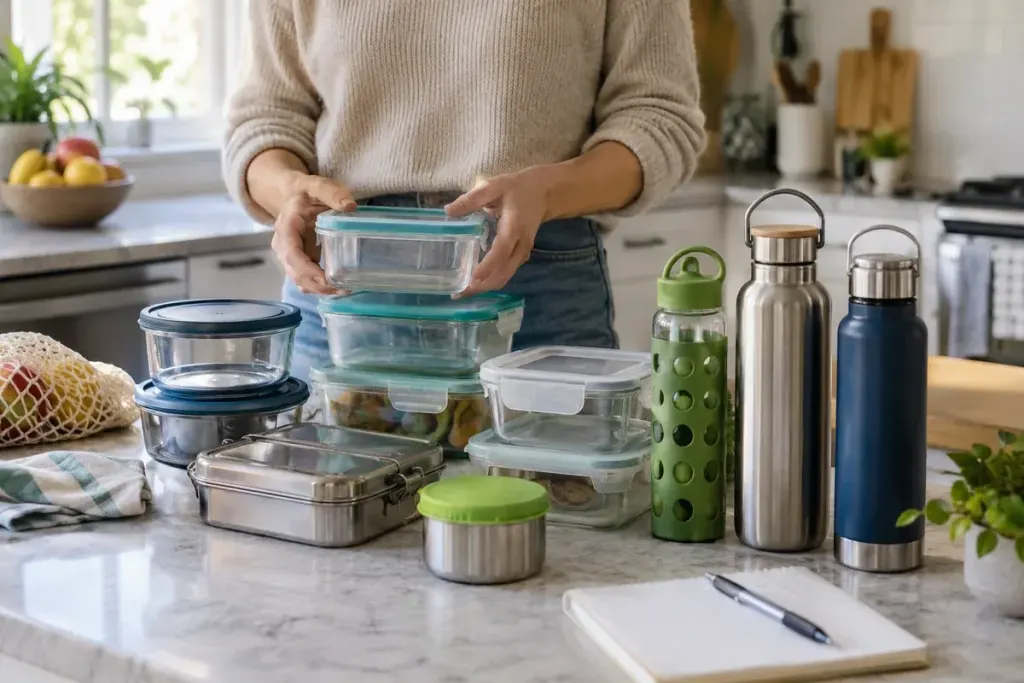
A cupboard full of reusable containers can still send you shopping for another set. Before buying, check which items you actually use and why the others stay behind. A reusable object only becomes part of a useful routine when it is suitable, available and convenient enough to use repeatedly.
The EPA’s archived guidance on reducing and reusing explains the basic value of avoiding unnecessary new products and using existing ones well. The household exercise below turns that general idea into a practical review, without claiming a precise environmental saving.
Sort by the task, not by the matching set
Gather the containers you use for lunch, leftovers and dry storage. Match lids and inspect condition. Keep food-contact items within their intended uses and care instructions; a container suitable for one purpose is not automatically safe for heating or repeated use in another.
Ask which shapes fit your ordinary meals and storage space. A slightly mismatched collection that works can be more useful than a complete set bought for its appearance. Do not retain damaged or unsuitable pieces merely to avoid discarding anything.
Find the point where the routine fails
Perhaps the lunch container is always drying when you need it, the bottle is difficult to clean, or the shopping bag lives in a cupboard you never pass on the way out. These are specific problems. Moving an item or changing when it is washed may help more than purchasing another version.
For one week, note which items leave the cupboard and which return unused. This is a personal observation, not a scientific life-cycle assessment. It can still show whether an intended reusable habit fits your day.
Buy only for a defined gap
If a genuine gap remains, write down the required size, care method and use before comparing products. Consider durability and replacement parts where relevant. Avoid treating an environmental label as proof that unlimited purchases are beneficial.
Pass on usable surplus through an appropriate route if someone else can use it, and follow local disposal guidance for damaged items. The objective is not the smallest possible cupboard or a perfect matching collection. It is a manageable set of suitable objects that you reach for, care for and use again.